Char Dham Yatra 2027: The Complete Guide from an Uttarakhand DMC
Every summer, lakhs of pilgrims climb into the Garhwal Himalayas to complete one of the holiest journeys in Hinduism: the Char Dham Yatra. The route links four shrines:
Yamunotri, source of the Yamuna
Gangotri, where the Ganga descends from the heavens
Kedarnath, one of the twelve Jyotirlingas of Lord Shiva
Badrinath, the abode of Lord Vishnu
Together they make up a route of about 1,200–1,500 km of mountain roads, river valleys and high-altitude trails.
The 2027 season will be one of the most closely watched yet. The Char Dham opens on Akshaya Tritiya, which falls on 8–9 May 2027, about three weeks later than in 2026. That shorter pre-monsoon window means the May and June departures will fill faster than usual, and Kedarnath helicopter seats and hotel rooms will be under even more pressure.
SnazzyTrips is a Destination Management Company (DMC) headquartered in Haldwani, and we've worked only in Uttarakhand since 2003. Our team plans the Char Dham around how the route actually works:
mandatory registration
realistic buffer days for traffic and landslides
confirmed stays at Kedarnath
helicopter guidance through official channels
support on the ground from Haridwar to Badrinath and back
This guide covers everything you need for 2027: expected opening and closing dates, package prices, registration, Kedarnath helicopter booking, day-by-day itineraries, the best months, costs, fitness advice for seniors, where you stay, and the mistakes to avoid.
Quick Answer:
Packages: 2027 Char Dham packages start from ₹22,900 per person for the 8-day Do Dham (Kedarnath and Badrinath) from Haridwar. The full Char Dham costs ₹31,900 for 10 days from Haridwar, ₹37,900 for 12 days from Delhi, and ₹38,900 for 13 days with Hemkund Sahib and the Valley of Flowers.
Opening: The yatra is expected to open around 8–9 May 2027.
Registration: Mandatory for every pilgrim.
Best windows: mid-May to June and mid-September to October.
Char Dham Yatra 2027 at a Glance
| Detail |
Information |
| The Four Dhams |
Yamunotri, Gangotri, Kedarnath, Badrinath |
| Region |
Garhwal Himalayas: Uttarkashi, Rudraprayag and Chamoli districts |
| Also Known As |
Chota Char Dham, Uttarakhand Char Dham |
| Traditional Order |
Yamunotri → Gangotri → Kedarnath → Badrinath (west to east) |
| Expected Opening |
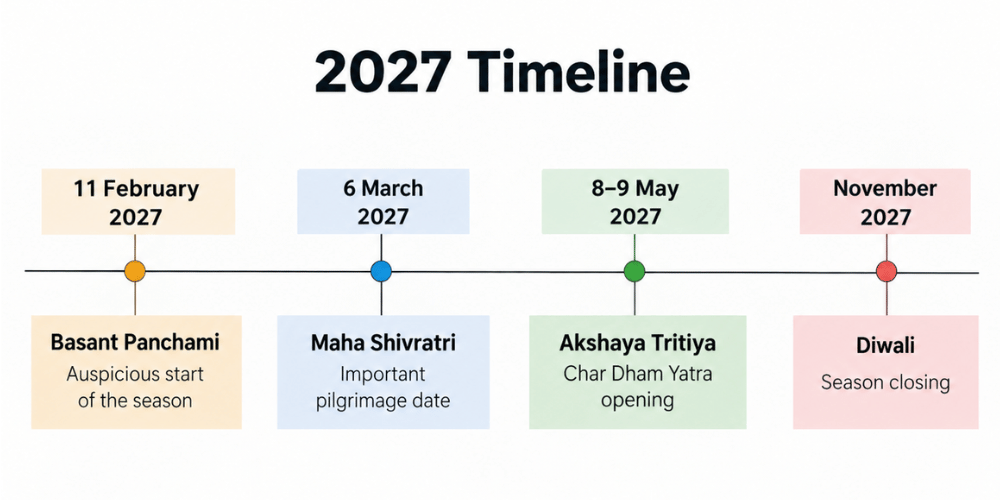
Around 8–9 May 2027 (Akshaya Tritiya), for Yamunotri and Gangotri |
| Expected Closing |
Around Diwali to November 2027 |
| Total Route |
About 1,200–1,500 km of road journey, plus treks |
| Treks |
Yamunotri about 5–6 km; Kedarnath about 16–18 km |
| Road-Accessible Dhams |
Gangotri and Badrinath |
| Registration |
Mandatory for all pilgrims |
| Helicopter |
Kedarnath shuttle from Phata, Sersi and Guptkashi; full Char Dham helicopter tours from Dehradun |
| Duration |
8 days (Do Dham) to 10–13 days (Char Dham) |
| Starting Points |
Haridwar, Rishikesh, Dehradun, Delhi |
| Best Time |
Mid-May–June and mid-September–October |
| Starting Price |
₹22,900 (Do Dham), ₹31,900 (Char Dham from Haridwar) |
Char Dham 2027 Opening and Closing Dates
How the Dates Are Decided
The Char Dham dates aren't fixed on a calendar. They follow religious tradition:
| Dham |
How the Opening Date Is Decided |
Expected 2027 Opening |
| Yamunotri |
Traditionally opens on Akshaya Tritiya |
Around 8–9 May 2027 |
| Gangotri |
Traditionally opens on Akshaya Tritiya |
Around 8–9 May 2027 |
| Kedarnath |
Announced on Maha Shivratri (6 March 2027) at Omkareshwar Temple, Ukhimath |
Usually a few days after Akshaya Tritiya |
| Badrinath |
Announced on Basant Panchami (11 February 2027) at the Tehri royal palace, Narendranagar |
Usually a few days after Akshaya Tritiya |
Expected closing dates in 2027:
Gangotri: usually on Govardhan Puja, the day after Diwali
Kedarnath and Yamunotri: usually on Bhai Dooj
Badrinath: usually mid-to-late November; the date is announced on Vijayadashami
📍 Important: These are expected dates, based on tradition. We'll update this page as soon as the official dates are announced in February and March 2027. Don't wait for the announcement to start planning: in 2027, the best May–June slots will fill quickly once the dates are out.
Why 2027 Is Different
In 2026, Akshaya Tritiya fell on 19 April. In 2027, it falls on 8–9 May. That means:
the pre-monsoon season is about three weeks shorter
May and June 2027 will be extremely busy
September–October 2027 becomes an even more important window for relaxed travel
Our advice: Book May–June 2027 departures by January–February 2027. Or plan for mid-September to October 2027, when the roads are repaired, the skies are clear, and crowds are smaller.
What Is the Char Dham Yatra?
Meaning
"Char Dham" means "four abodes". In Uttarakhand, it refers to the four Himalayan shrines of Yamunotri, Gangotri, Kedarnath and Badrinath, sacred to the Goddess Yamuna, the Goddess Ganga, Lord Shiva and Lord Vishnu.
Chota Char Dham vs the Bada (National) Char Dham
| Details |
Uttarakhand Char Dham , Chota char Dham |
National Char Dham (Bada Char Dham) |
| Shrines |
Yamunotri, Gangotri, Kedarnath, Badrinath |
Badrinath, Dwarka, Puri, Rameswaram |
| Location |
All in Uttarakhand |
North, West, East and South India |
| Tradition |
The Himalayan pilgrimage |
Associated with Adi Shankaracharya |
| Common Shrine |
Badrinath |
Badrinath |
When most people say "Char Dham Yatra", they mean the Uttarakhand circuit.
Why the Yatra Goes West to East
Tradition says the yatra should go clockwise: Yamunotri first, then Gangotri, Kedarnath and finally Badrinath. Starting with the two sources of the holy rivers and ending with Lord Vishnu's abode is believed to complete the journey of purification. It also makes practical sense on the roads.
The Four Dhams: What to Expect at Each
Yamunotri: Source of the Yamuna (about 3,293 m)
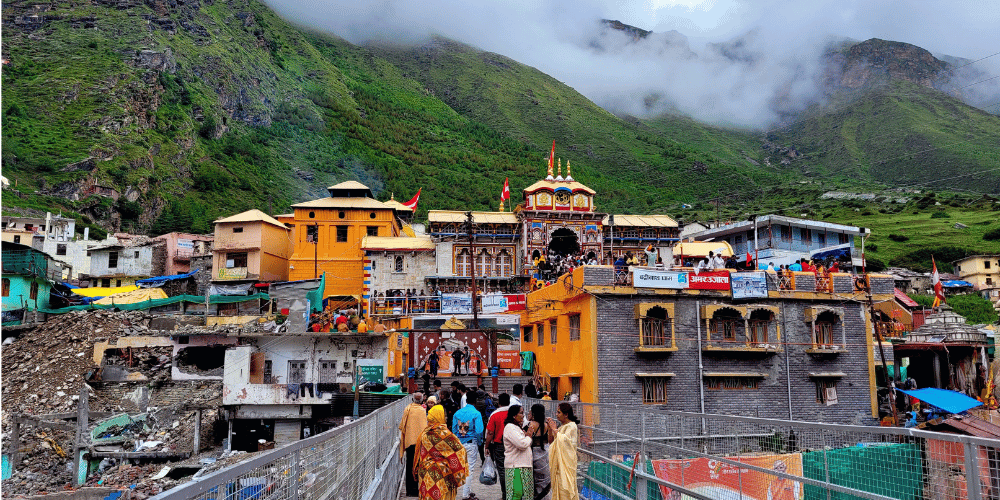
Deity: Goddess Yamuna, daughter of Surya (the Sun God) and sister of Yama (the God of Death). Bathing in the Yamuna is believed to protect devotees from an untimely death.
How you reach it: By road to Janki Chatti, via Barkot and Hanuman Chatti. From there, it's a trek of about 5–6 km to the temple, on foot, by pony, palki (doli) or pithoo. Char Dham helicopter tours land at Kharsali, near Janki Chatti, but the final stretch is still by trek or pony.
Highlights:
Surya Kund: A hot spring where pilgrims cook rice and potatoes in cloth bundles as prasad, a tradition found nowhere else.
Divya Shila: A rock pillar worshipped before entering the temple.
Kharsali: The village where the Goddess is worshipped in winter.
Tips: Start the trek early, by 6–7 AM. The trail is steep in parts, and weather can change by the afternoon.
Gangotri: Where the Ganga Descends (about 3,100 m)
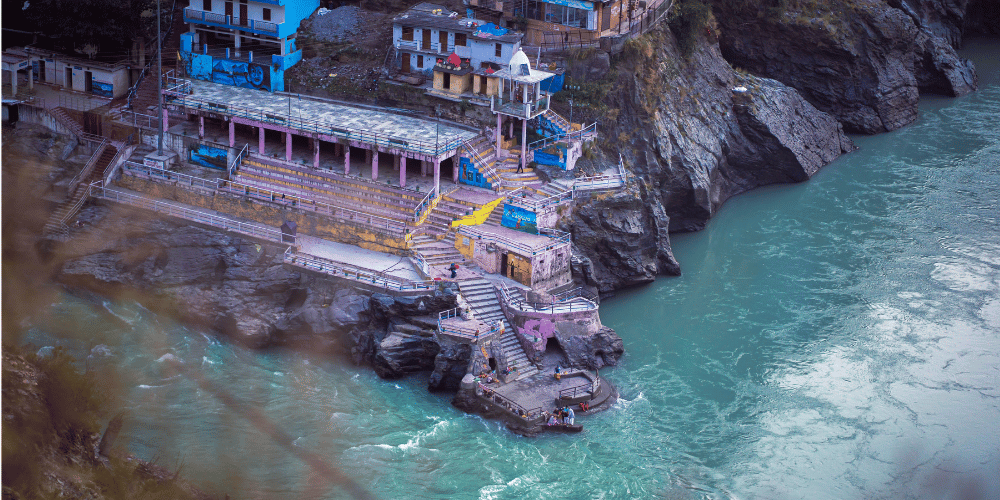
Deity: Goddess Ganga. Legend says King Bhagirath meditated here to bring the Ganga down from the heavens to free the souls of his ancestors. That's why the river is called the Bhagirathi at its source.
How you reach it: Fully by road, from Uttarkashi via Bhatwari, Harsil and Bhairon Ghati. The temple is a short walk from the parking area.
Highlights:
Bhagirath Shila: The rock where King Bhagirath is believed to have meditated.
Harsil Valley: One of the most beautiful drives of the yatra, with apple orchards and deodar forests.
Gaumukh (optional): The snout of the Gangotri Glacier, the source of the Bhagirathi, about 18 km away by trek. It needs a separate permit with a limited daily quota.
Mukhba: The village where the Goddess is worshipped in winter.
Tips: The temple premises can be busy from mid-morning, so arrive early for a calmer darshan.
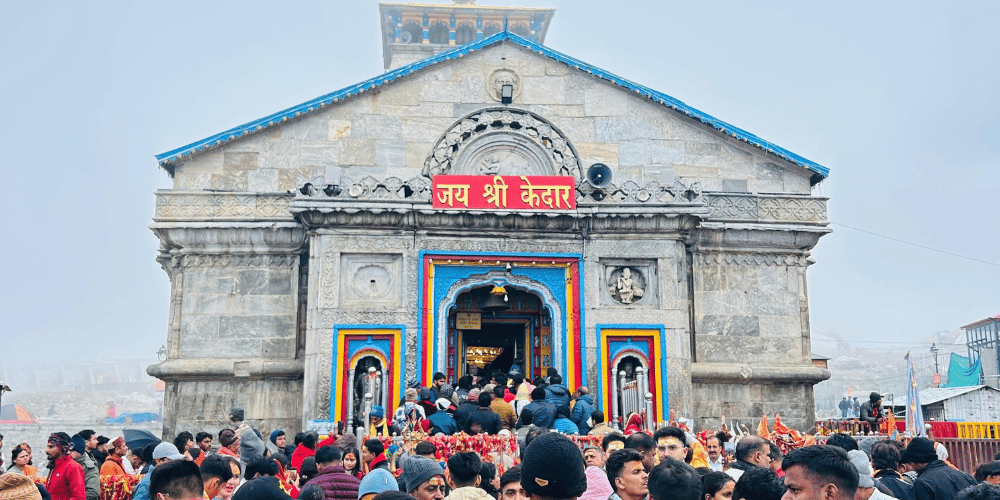
Kedarnath: The Jyotirlinga of Lord Shiva (about 3,583 m)
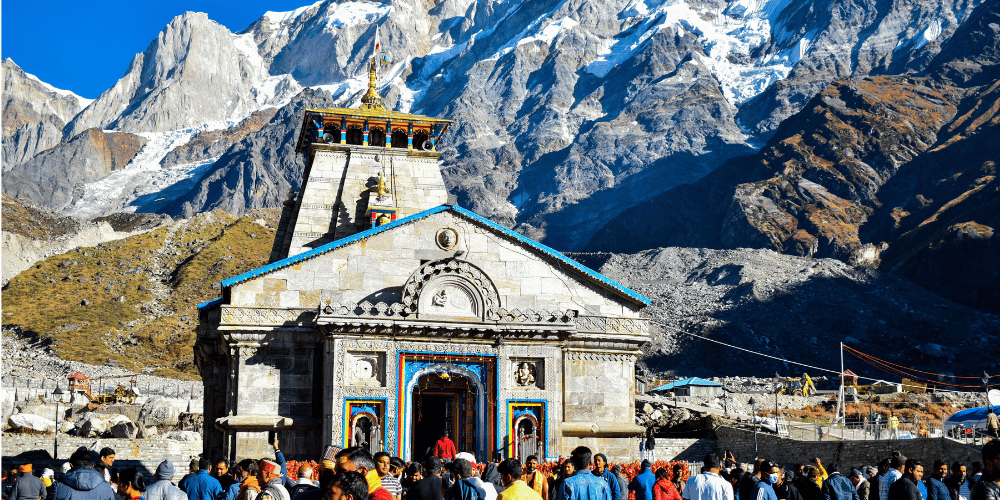
Deity: Lord Shiva, as one of the twelve Jyotirlingas and the first of the Panch Kedar. Legend says the Pandavas built the temple to seek Shiva's forgiveness after the Mahabharata war. Adi Shankaracharya is believed to have revived it, and his samadhi is behind the temple.
How you reach it: By road to Sonprayag, then a shuttle to Gaurikund. From Gaurikund it's a trek of about 16–18 km, on foot, by pony, palki or pithoo, or you can take a helicopter from Phata, Sersi or Guptkashi.
Highlights:
Kedarnath Temple: Built of large stone slabs, set against the snow-covered Kedarnath range.
Bhairavnath Temple: Bhairav is worshipped as the guardian of Kedarnath.
Adi Shankaracharya Samadhi: Rebuilt after the 2013 floods.
Evening aarti: One of the most moving experiences of the entire yatra.
Tips: Kedarnath is the most demanding part of the yatra. Stay overnight near the temple if you can, so you aren't rushed, and keep the next day light.
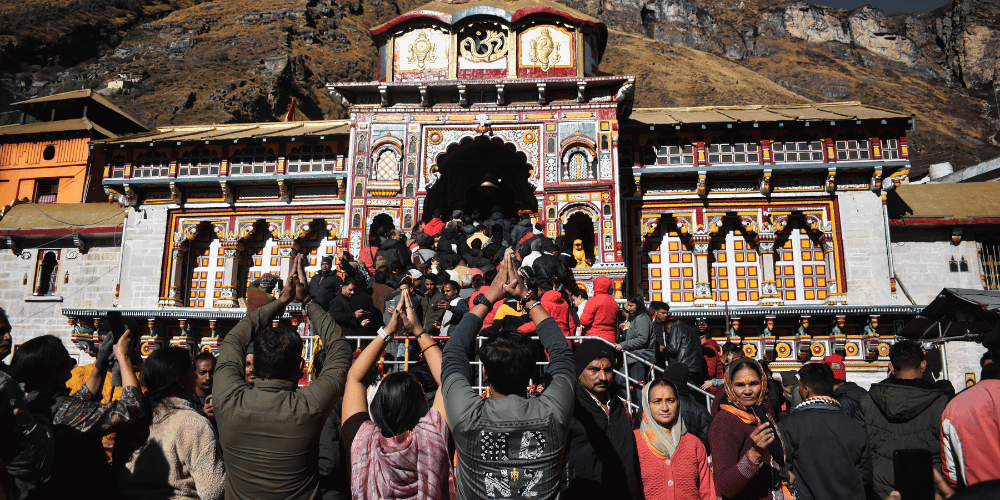
Badrinath: The Abode of Lord Vishnu (about 3,300 m)
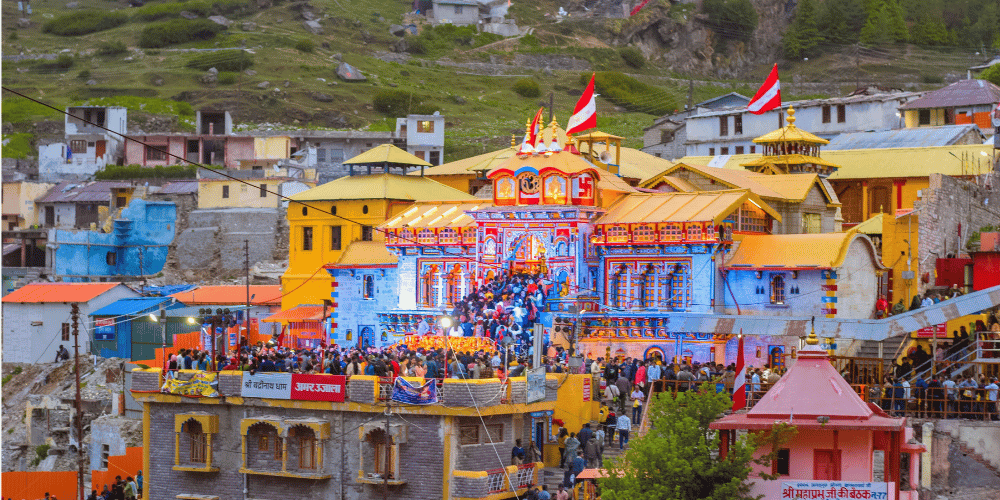
Deity: Lord Vishnu as Badri Narayan, one of the 108 Divya Desams. Adi Shankaracharya is traditionally credited with re-establishing the temple, and the chief priest (Rawal) traditionally comes from Kerala.
How you reach it: Fully by road, via Rudraprayag, Chamoli and Joshimath (Jyotirmath).
Highlights:
Tapt Kund: A natural hot spring where pilgrims bathe before darshan.
Brahma Kapal: A ghat where pind daan is performed for ancestors.
Mana Village: Officially "India's First Village", near the Tibet border, home to Vyas Gufa, Ganesh Gufa, Bhim Pul and the Saraswati river.
Vasudhara Falls: A trek of about 5–6 km from Mana.
Tips: Attend the early-morning abhishek, or the evening aarti for a peaceful darshan.
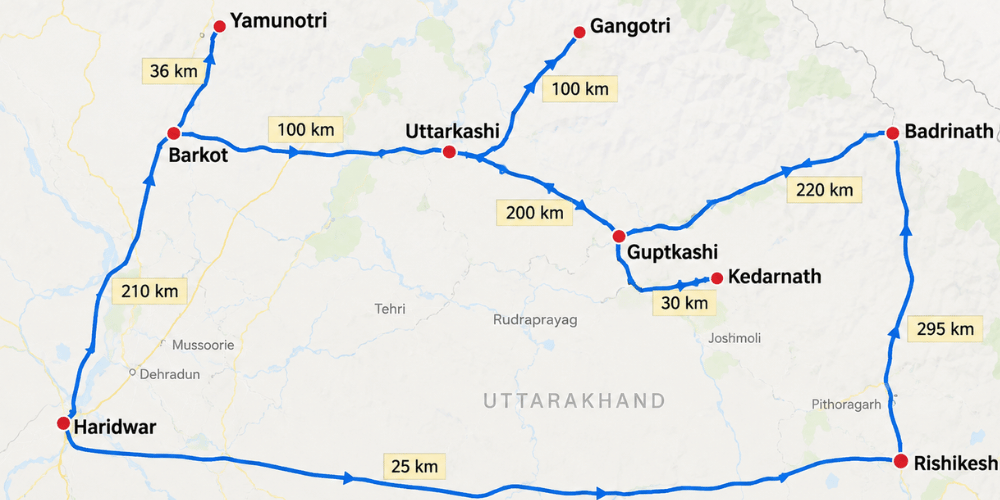
Char Dham Route: Distances and Drive Times
| Route Stretch |
Approx. Distance |
Approx. Drive Time |
| Haridwar → Barkot |
210 km |
7–8 hours |
| Barkot → Janki Chatti |
45 km |
2 hours |
| Janki Chatti → Yamunotri |
5–6 km trek |
3–4 hours up |
| Barkot → Uttarkashi |
100 km |
4–5 hours |
| Uttarkashi → Gangotri |
100 km |
4 hours |
| Uttarkashi → Guptkashi |
220 km |
8–9 hours |
| Guptkashi → Sonprayag |
30 km |
1–1.5 hours |
| Gaurikund → Kedarnath |
16–18 km trek |
6–8 hours up |
| Guptkashi → Badrinath |
190 km |
7–8 hours |
| Badrinath → Rudraprayag |
160 km |
6 hours |
| Rudraprayag → Haridwar |
165 km |
5–6 hours |
Get your drivers to confirm these figures. Times can increase sharply with traffic regulations during the peak season.
📍 Buffer days matter. During May–June, one-way traffic rules and checkpoints on the Badrinath and Gangotri highways can hold vehicles for hours. We build buffer time into every Char Dham itinerary, especially around Uttarkashi and Guptkashi.
Char Dham Yatra Packages 2027
Prices are per person, typically on a twin- or triple-sharing basis, and vary with group size, hotel category and season.
Which Char Dham Package Is Right for You?
| Traveller Type |
Recommended Package |
Why |
| Short on time |
Do Dham (8 days) |
Covers the two most-visited Dhams |
| First-time full yatra from North India |
Char Dham ex Haridwar (10 days) |
The classic route at the best value |
| Delhi-NCR families |
Char Dham ex Delhi (12 days) |
Door-to-door from Delhi |
| Sikh and nature pilgrims (July–August) |
Char Dham with Hemkund Sahib and Valley of Flowers (13 days) |
Adds Hemkund Sahib and the flower season |
| Senior citizens |
Any package plus a Kedarnath helicopter, or the full helicopter yatra |
Reduces the hardest trek |
| Travellers from South or West India |
City packages (Chennai, Mumbai) |
Built around your flights |
| Limited time, higher budget |
Char Dham by helicopter |
All four Dhams in 5–6 days |
Do Dham vs Char Dham vs Helicopter Yatra
| Factor |
Do Dham (Kedar–Badri) |
Char Dham by Road |
Char Dham by Helicopter |
| Shrines |
Kedarnath, Badrinath |
All four |
All four |
| Duration |
7–8 days |
10–13 days |
5–6 days |
| Trekking |
Kedarnath (or a helicopter) |
Yamunotri and Kedarnath (or pony or helicopter) |
Minimal, with short walks and pony stretches |
| Physical Effort |
Moderate |
High |
Low to moderate |
| Cost |
Lowest |
Moderate |
Highest |
| Best For |
Short trips, first-timers |
Complete traditional yatra |
Seniors, short schedules |
Char Dham Registration 2027: Complete Guide

Is registration mandatory? Yes. Registration with Uttarakhand Tourism is mandatory for every Char Dham pilgrim, for all four Dhams, not only Kedarnath. Registration details are checked along the route.
How to Register
| Method |
Details |
| Online |
Through the official Uttarakhand Tourism registration portal and its mobile app, when registrations open for the season |
| Offline counters |
Registration counters have operated at points like Haridwar and Rishikesh in recent seasons, subject to official arrangements each year |
| Through SnazzyTrips |
We register all our pilgrims as part of the package |
Documents Needed
A government photo ID (Aadhaar preferred) for each pilgrim
A mobile number for each group
Travel dates for each Dham
Registration Tips
Register as soon as the portal opens for 2027, usually in the weeks before the opening dates.
Make sure the dates on your registration match your actual itinerary.
Carry your registration (printed or on your phone) and your ID at all times.
Registration rules can change each year. We share the latest process with every pilgrim before departure.
Kedarnath Helicopter 2027: How It Works
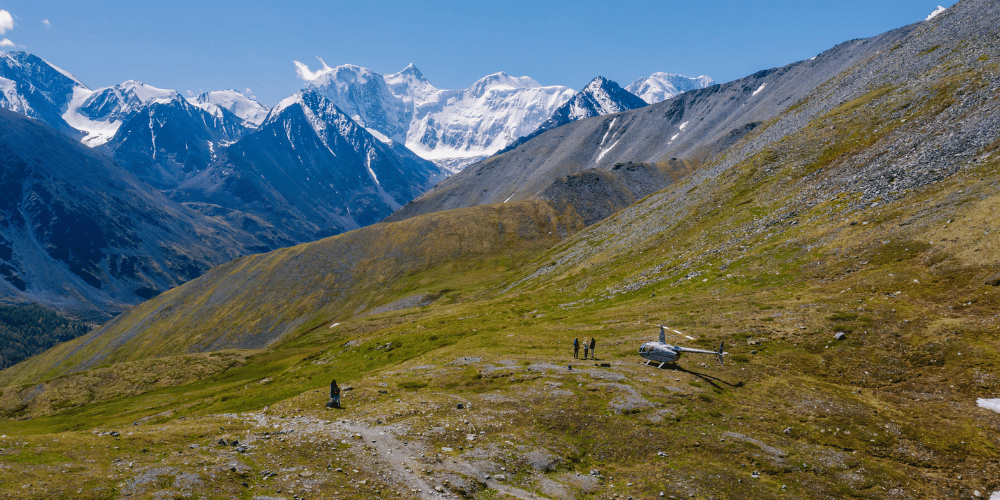
The Kedarnath helicopter shuttle is the most popular way for seniors and time-limited pilgrims to reach Kedarnath. It cuts the 16–18 km trek to a flight of under 10 minutes.
| Detail |
Information |
| Helipads |
Phata, Sersi and Guptkashi (in the Kedar valley) |
| Flight Time |
About 7–10 minutes one way |
| Booking |
Only through the official IRCTC HeliYatra portal for Kedarnath |
| Fares |
Set by the government each season |
| Requirement |
Valid Char Dham registration |
| Weather |
Flights are cancelled in bad weather or poor visibility |
Important Helicopter Tips
Book only on the official portal. Every season, fake websites and social media pages sell "Kedarnath helicopter tickets", and pilgrims lose money. Book only through the official IRCTC HeliYatra platform.
Tickets sell out fast. Booking windows open in phases before and during the season, and May–June slots go within hours.
Have a backup plan. Bad weather can cancel flights. We plan a pony, palki or trek backup for every helicopter pilgrim.
Baggage limits apply. Carry only a small bag.
SnazzyTrips guides you through the official booking process, aligns your itinerary with your flight slot, and arranges the backup plan.
Full Char Dham by helicopter: For a complete helicopter yatra from Dehradun, which lands near Yamunotri (Kharsali), Gangotri (Harsil), Kedarnath and Badrinath, see our Char Dham Yatra by helicopter packages
Char Dham Itinerary 2027: 10 Days from Haridwar
Day 1: Haridwar → Barkot (about 210 km, 7–8 hours)
Pickup in Haridwar or Rishikesh. Drive via Dehradun and Mussoorie (or the Vikasnagar route) to Barkot, with views of the Yamuna valley. Overnight in Barkot.
Day 2: Yamunotri Darshan
Drive to Janki Chatti (about 45 km). Trek about 5–6 km to Yamunotri, on foot or by pony or palki. Take a holy dip, cook prasad in Surya Kund, and have darshan. Trek down and return to Barkot. Overnight in Barkot.
Day 3: Barkot → Uttarkashi (about 100 km, 4–5 hours)
Drive to Uttarkashi along the Bhagirathi. Visit the Kashi Vishwanath Temple and attend the evening aarti. Overnight in Uttarkashi.
Day 4: Gangotri Darshan
Drive about 100 km via Harsil to Gangotri. Darshan at the Gangotri temple and Bhagirath Shila, then return to Uttarkashi. Overnight in Uttarkashi.
Day 5: Uttarkashi → Guptkashi or Sitapur (about 220 km, 8–9 hours)
Long drive via Tehri and Srinagar (Garhwal) to Guptkashi or Sitapur. Visit Guptkashi's Vishwanath Temple and Ardhnareshwar Temple. Overnight near Guptkashi or Sitapur.
Day 6: Kedarnath
Early drive to Sonprayag, then a shuttle to Gaurikund. Trek about 16–18 km to Kedarnath, or fly by helicopter from Phata, Sersi or Guptkashi. Evening darshan and aarti. Overnight at Kedarnath (camps or guesthouses).
Day 7: Kedarnath → Guptkashi
Morning darshan, then visit Bhairavnath Temple and the Adi Shankaracharya Samadhi. Trek down to Gaurikund (or fly), then drive to Guptkashi. Overnight in Guptkashi.
Day 8: Guptkashi → Badrinath (about 190 km, 7–8 hours)
Drive via Rudraprayag, Karnaprayag, Chamoli and Joshimath to Badrinath. Bathe at Tapt Kund, then evening darshan. Overnight in Badrinath.
Day 9: Badrinath and Mana → Rudraprayag
Early-morning darshan. Visit Mana Village, Vyas Gufa, Ganesh Gufa and Bhim Pul. Drive to Rudraprayag or Srinagar. Overnight there.
Day 10: Rudraprayag → Haridwar
Drive via Devprayag, the confluence of the Alaknanda and Bhagirathi. Drop at Haridwar or Rishikesh.
12-Day Version from Delhi
The same route, plus a Delhi → Haridwar day at the start and a Haridwar → Delhi day at the end. Since April 2026, the Delhi–Dehradun Expressway has made the Delhi–Haridwar stretch much faster.
13-Day Version with Hemkund Sahib and the Valley of Flowers (July–September)
After Badrinath, drive to Govindghat, trek to Ghangaria, and visit the Valley of Flowers (in bloom from July to September) and Hemkund Sahib, before returning to Haridwar.
8-Day Do Dham (Kedarnath and Badrinath)
Haridwar → Guptkashi → Kedarnath → Guptkashi → Badrinath → Rudraprayag → Haridwar.
⚠️ Buffer days: Keep at least 1–2 extra days in your overall plan, especially for May–June and early September departures.
Best Time for Char Dham Yatra 2027: Month by Month
| Month |
Status |
What to Expect |
| January–April |
Closed |
All four Dhams closed for winter; worship continues at the winter seats |
| Early May |
Opening (around 8–9 May 2027) |
Fresh snow on the peaks, cold mornings, very heavy crowds at the opening |
| Mid-May–June |
Peak season |
Busiest months; heavy traffic; hotels and helicopters sell out early |
| July–August |
Monsoon |
Landslide risk and road closures; best combined with the Valley of Flowers and Hemkund Sahib |
| Mid-September–October |
Highly recommended |
Clear skies, repaired roads, fewer crowds, excellent mountain views |
| November |
Closing |
Kedarnath, Gangotri and Yamunotri close around Diwali; Badrinath later in November |
Our 2027 recommendation:
Most comfortable yatra: mid-September to mid-October 2027.
May–June 2027: book by January–February 2027 and expect crowds.
July–August: only with flexible plans and buffer days.
Char Dham Yatra Cost 2027
Short answer:
Do Dham, 8 days from Haridwar: from ₹22,900 per person.
Full Char Dham, 10 days from Haridwar: from ₹31,900.
Full Char Dham, 12 days from Delhi: from ₹37,900.
With Hemkund Sahib and the Valley of Flowers: from ₹38,900.
Helicopter tickets, ponies and palkis are extra.
What Affects the Cost
Starting city: Haridwar packages are cheapest; Delhi and other cities add travel days.
Group size and vehicle: A Tempo Traveller for a large group costs less per person than a private SUV.
Hotel category: Standard, deluxe or premium. At Kedarnath, choices are always simple.
Season: Peak May–June rates are higher than in September–October.
Helicopter and pony use: Kedarnath helicopter, pony and palki costs are additional.
What's Usually Included
Hotel stays on a sharing basis as per itinerary
Breakfast and dinner at hotels (meals at Kedarnath are usually excluded or very simple)
A vehicle for the whole road journey, with fuel, tolls, parking and driver allowance
Char Dham registration assistance
A trip coordinator and support on the ground
Sightseeing as per itinerary, including Mana Village
What's Usually Not Included
Train or flight tickets to Haridwar, Dehradun or Delhi
Kedarnath helicopter tickets
Pony, palki, pithoo or porter charges at Yamunotri and Kedarnath
VIP darshan or special puja charges
Temple donations and personal expenses
Lunch, unless mentioned
Travel insurance
GST, unless your quote says it's included
Extra Costs to Budget For
| Item |
Notes |
| Kedarnath helicopter |
Official fare set each season; book via IRCTC HeliYatra |
| Pony, palki or pithoo |
Rates fixed by the local administration; vary by route and season |
| Puja and donations |
Optional, at each Dham |
| Meals not included |
About ₹500–₹1,000 per day |
| Warm clothing and rain gear |
One-time purchase if you don't own them |
Fitness, Senior Citizens and Health
Who Can Do the Char Dham Yatra?
Most healthy adults and many senior citizens complete the Char Dham every year. The challenge comes from two things:
Altitude: Kedarnath is at about 3,583 m, and Yamunotri, Gangotri and Badrinath are above 3,000 m.
The two treks: Yamunotri and Kedarnath.
Advice for Senior Citizens
Get a full medical check-up before booking, especially if you're above 60 or have heart, blood pressure, diabetes or breathing conditions.
Use a pony, palki or helicopter for Kedarnath, and a pony or palki for Yamunotri.
Choose an itinerary with buffer days and avoid back-to-back long drives.
Carry all regular medicines, plus a doctor's prescription.
Health screening points operate on the route. Follow medical advice given there.
Altitude Sickness (AMS)
Watch for: headache, nausea, dizziness, breathlessness or unusual tiredness above 3,000 m.
How to reduce the risk:
Drink 3–4 litres of water a day
Avoid alcohol and smoking
Walk slowly on treks
Don't push through serious symptoms
If symptoms get worse, descend and seek medical help immediately.
Prepare 4–6 Weeks Before the Yatra
Walk briskly for 45–60 minutes daily
Climb stairs to build stamina for the treks
Practise breathing exercises (pranayama)
Break in your walking shoes
The Two Treks: Yamunotri and Kedarnath
| Details |
Yamunotri Treks |
Kedarnath Trek |
| Start Point |
Janki Chatti |
Gaurikund |
| Distance |
About 5–6 km one way |
About 16–18 km one way |
| Time Up |
3–4 hours on foot |
6–8 hours on foot |
| Difficulty |
Moderate, with steep sections |
Moderate to hard (long and high) |
| Pony / Palki / Pithoo |
Available |
Available |
| Helicopter |
Helicopter tours land at Kharsali; final stretch by trek or pony |
Shuttle from Phata, Sersi and Guptkashi |
| Facilities on Trail |
Tea stalls, rest points |
Tea stalls, medical points, rest shelters |
Tips for both treks:
Start early, by 6–7 AM.
Carry a rain jacket and a warm layer.
Walk at a steady pace.
Hire ponies and palkis only from authorised counters.
Where You Stay on the Char Dham Yatra
| Halt |
Type of Stay |
What to Expect |
| Barkot (for Yamunotri) |
Hotels |
Good standard stays |
| Uttarkashi (for Gangotri) |
Hotels |
Good choice of hotels by the Bhagirathi |
| Guptkashi, Sitapur or Sonprayag (for Kedarnath) |
Hotels |
Good stays; book early for May–June |
| Kedarnath |
Camps, tents, GMVN and private cottages |
Very basic; shared facilities; cold nights |
| Badrinath |
Hotels and dharamshalas |
Simple to comfortable stays near the temple |
| Rudraprayag or Srinagar |
Hotels |
Return-journey halt |
📍 Kedarnath stays: Rooms at Kedarnath are limited and very simple. We confirm your Kedarnath stay before departure, so you aren't searching for a bed at 3,583 m.
What to Pack for the Char Dham Yatra 2027
| Item |
Why |
| Warm jacket, thermals and woollens |
Cold mornings and nights at all four Dhams, even in June |
| Rain poncho or waterproof jacket |
Sudden rain is common |
| Trekking shoes with good grip |
For Yamunotri, Kedarnath and wet temple paths |
| Woollen cap, gloves and socks |
Kedarnath nights can be near freezing |
| Personal medicines and a first-aid kit |
Medical facilities are limited in remote areas |
| Photo ID and registration (printed and on phone) |
Checked along the route |
| Cash in small notes |
ATMs can be unreliable in remote towns |
| Power bank and torch |
Electricity can be irregular at Kedarnath |
| Sunscreen, sunglasses and lip balm |
Strong high-altitude sun |
| Water bottle and dry snacks |
For long drives and treks |
| Puja items (optional) |
For offerings at the Dhams |
How to Reach the Char Dham Starting Points
Haridwar and Rishikesh:
By train: The main railheads. From Delhi, the Dehradun Shatabdi and the Vande Bharat reach Haridwar. Check timings on IRCTC.
By road: Delhi to Haridwar via the Delhi–Dehradun Expressway (opened April 2026) or the Meerut route.
Dehradun: Jolly Grant Airport, about 35 km from Haridwar and 20 km from Rishikesh, is the nearest airport, with flights from Delhi, Mumbai, Bangalore and other cities. Char Dham helicopter tours also start from Dehradun.
From other cities: See our city guides for routes and packages:
Delhi:
Mumbai:
Ahmedabad:
Kolkata:
Chennai:
Bangalore:
Kerala:
Roads, Traffic and Safety on the Char Dham Route
Peak-season traffic: In May–June, traffic regulations and one-way systems on stretches of the Gangotri, Kedarnath and Badrinath routes can cause long waits.
Landslides: Most common in the monsoon (July–August), but they can occur at any time.
Night driving: Avoided on hill roads. Our drivers drive only in daylight on the mountain stretches.
Daily road updates: Our team checks road and weather conditions daily with local contacts along the route and adjusts plans when needed.
Buffer days: The single most important safety and comfort decision in planning a Char Dham itinerary.
Temple Rules and Etiquette
Dress modestly at all four Dhams.
Follow the queue and the instructions of temple staff and the police.
Photography and videography are restricted within temple premises at some Dhams. Follow local rules and signboards.
Respect the rituals and other pilgrims, and keep the temple areas clean.
Use only authorised priests and counters for pujas and donations.
Common Mistakes When Booking a Char Dham Yatra
| Mistake |
Better Approach |
| Assuming the yatra opens in late April 2027 |
In 2027, expect an opening around 8–9 May (Akshaya Tritiya) |
| Waiting for the official dates before booking |
Book May–June 2027 by January–February; dates can be adjusted |
| Buying helicopter tickets from unofficial websites |
Use only the official IRCTC HeliYatra portal |
| Choosing an itinerary with no buffer days |
Choose 10+ days for the full Char Dham, with buffer time |
| Thinking registration is only for Kedarnath |
Registration is mandatory for all four Dhams |
| Not confirming Kedarnath accommodation |
Confirm your Kedarnath stay before you travel |
| Taking elderly parents on the full Kedarnath trek |
Use a helicopter, pony or palki |
| Packing only summer clothes for June |
Pack warm layers; nights are cold at all four Dhams |
| Choosing only on price |
Compare buffer days, Kedarnath stay, registration support and on-ground help |
Responsible Pilgrimage in the Himalayas
The Char Dham route passes through fragile mountain ecosystems. Please:
carry a reusable water bottle and avoid single-use plastic
bring your waste back down from Yamunotri and Kedarnath
don't throw plastic or offerings wrapped in plastic into the rivers
use authorised ponies and palkis, and treat the animals and their handlers with respect
support local businesses and homestays along the route
Why Choose SnazzyTrips for Char Dham Yatra 2027
SnazzyTrips is a Haldwani-based Uttarakhand DMC since 2003, trusted by 20,000+ families, covering 50+ destinations with 150+ verified local partners and a 4.6/5 average rating across verified traveller reviews.
An Uttarakhand-only DMC: We plan and run your yatra ourselves with our own local network, not through unknown subcontractors.
Buffer days built in: Every full Char Dham itinerary has realistic buffer time, especially around Uttarkashi and Guptkashi.
Registration handled: We register every pilgrim and share the latest process for 2027.
Helicopter guidance through official channels: We help you book through the official IRCTC HeliYatra portal and plan a backup.
Confirmed Kedarnath stays: Your Kedarnath accommodation is confirmed before departure.
Daily road updates: Our team tracks road and weather conditions throughout the season.
One coordinator: A single point of contact by phone and WhatsApp, before, during and after the yatra.
Read more about us on our About Us page, meet the team on Our Team, and read traveller feedback on our Reviews page.
Extend Your Char Dham Yatra
Kedarnath tour packages: For a Kedarnath-only yatra
Badrinath tour packages: For a Badrinath-only yatra
Char Dham by helicopter: For seniors and short schedules
Valley of Flowers and Hemkund Sahib: July–September
Chopta and Tungnath: The highest Shiva temple, near the Kedarnath route
Auli: Above Joshimath, on the Badrinath route
Haridwar and Rishikesh: The traditional starting points (the Haridwar Ardh Kumbh runs 14 January–20 April 2027)
Adi Kailash: Many pilgrims do the Char Dham in May–June and Adi Kailash in September–October
Kainchi Dham and Jageshwar Dham: Kumaon's spiritual circuit
Garhwal tour packages, Kumaon tour packages and Uttarakhand tour packages
Uttarakhand pilgrimage tours
Frequently Asked Questions: Char Dham Yatra 2027
1. When will the Char Dham Yatra 2027 start?
The Char Dham Yatra 2027 is expected to start around 8–9 May 2027, when Yamunotri and Gangotri traditionally open on Akshaya Tritiya. Kedarnath and Badrinath usually open a few days later, on dates announced in February and March 2027.
2. When will the Kedarnath 2027 opening date be announced?
The Kedarnath opening date is traditionally announced on Maha Shivratri, which falls on 6 March 2027, at the Omkareshwar Temple in Ukhimath.
3. When will the Badrinath 2027 opening date be announced?
The Badrinath opening date is traditionally announced on Basant Panchami, 11 February 2027, at the Tehri royal palace in Narendranagar.
4. Why does the Char Dham open later in 2027?
The yatra follows the Hindu calendar. Akshaya Tritiya falls on 8–9 May in 2027, compared with 19 April in 2026, so the season starts about three weeks later.
5. What is the cost of a Char Dham Yatra package in 2027?
SnazzyTrips' 2027 packages start from ₹22,900 per person for the 8-day Do Dham. The 10-day Char Dham from Haridwar costs ₹31,900, the 12-day Char Dham from Delhi ₹37,900, and the 13-day Char Dham with Hemkund Sahib and the Valley of Flowers ₹38,900.
6. How many days are needed for the Char Dham Yatra?
The full Char Dham takes 10 days from Haridwar, 12 days from Delhi, and 13 days with Hemkund Sahib. The Do Dham (Kedarnath and Badrinath) takes about 8 days. By helicopter, it takes 5–6 days.
7. Is registration mandatory for the Char Dham Yatra 2027?
Yes. Registration with Uttarakhand Tourism is mandatory for every pilgrim, for all four Dhams. SnazzyTrips registers all pilgrims as part of the package.
8. How do I register for the Char Dham Yatra?
You can register online through the official Uttarakhand Tourism portal or app once registrations open for the season, or at official registration counters where available. SnazzyTrips handles registration for its pilgrims.
9. Do I need a permit for the Char Dham Yatra?
No Inner Line Permit is needed, but registration is mandatory. A separate permit is needed only for optional treks like Gaumukh.
10. What is the correct order of the Char Dham Yatra?
The traditional order is Yamunotri, Gangotri, Kedarnath and then Badrinath, moving from west to east.
11. How long is the Kedarnath trek?
The Kedarnath trek from Gaurikund is about 16–18 km one way and usually takes 6–8 hours on foot. Ponies, palkis and helicopters are available.
12. How long is the Yamunotri trek?
The Yamunotri trek from Janki Chatti is about 5–6 km one way, usually taking 3–4 hours on foot. Ponies and palkis are available.
13. How do I book a Kedarnath helicopter in 2027?
Book only through the official IRCTC HeliYatra portal, after completing your Char Dham registration. Tickets open in phases and sell out quickly in May–June.
14. Is there a helicopter to Yamunotri?
Char Dham helicopter tours land at Kharsali near Janki Chatti, but the final stretch to the Yamunotri temple is by trek, pony or palki.
15. Can senior citizens do the Char Dham Yatra?
Yes. Many seniors complete it every year using helicopters, ponies or palkis for Kedarnath and Yamunotri. A medical check-up before travel is strongly recommended.
16. What is the best time for the Char Dham Yatra in 2027?
Mid-May to June and mid-September to October 2027 are the best windows. September–October is usually less crowded with clearer weather. July–August brings monsoon risks.
17. Is the Char Dham Yatra safe in the monsoon?
It's possible with flexibility, but July–August brings landslides and road closures. Keep buffer days and stay updated on road conditions.
18. What is the difference between Do Dham and Char Dham?
Do Dham covers Kedarnath and Badrinath in about 8 days. Char Dham covers all four shrines in 10–13 days.
19. Can I combine Hemkund Sahib and the Valley of Flowers with the Char Dham?
Yes. Our 13-day package adds Hemkund Sahib and the Valley of Flowers after Badrinath. It's best done in July–September, when the Valley of Flowers blooms.
20. Where do pilgrims stay at Kedarnath?
At Kedarnath, pilgrims stay in camps, tents, GMVN accommodation or private cottages. Facilities are basic and rooms are limited, so book early.
21. What should I pack for the Char Dham Yatra?
Pack warm layers, a rain jacket, trekking shoes, a woollen cap and gloves, medicines, your ID and registration, cash, a power bank and a water bottle.
22. Is mobile network available on the Char Dham route?
Network is available in the main towns. It can be weak on parts of the route and at Kedarnath and Yamunotri, so inform your family of your schedule.
23. Can I start the Char Dham Yatra from Delhi?
Yes. Our 12-day Char Dham from Delhi includes pickup and drop in Delhi. The Delhi–Dehradun Expressway has made the Delhi–Haridwar stretch faster since 2026.
24. What is the difference between the Uttarakhand Char Dham and the National Char Dham?
The Uttarakhand Char Dham covers Yamunotri, Gangotri, Kedarnath and Badrinath. The National Char Dham covers Badrinath, Dwarka, Puri and Rameswaram, across four directions of India.
25. Can I do the Char Dham and Adi Kailash in the same year?
Yes. Many pilgrims do the Char Dham in May–June and Adi Kailash in mid-September to October, when both routes are open.
26. How early should I book the Char Dham Yatra 2027?
For May–June 2027, book by January–February 2027. For September–October, book 6–8 weeks ahead.
27. How do I book a Char Dham package with SnazzyTrips?
Call or WhatsApp +91 7983429120, email care@snazzytrips.in, or use the booking form. Share your preferred dates, group size, starting city and any health needs, and we'll send a 2027 itinerary.
Plan Your Char Dham Yatra 2027 with an Uttarakhand Team
The Char Dham is a once-in-a-lifetime journey for many families, and 2027's shorter pre-monsoon window makes early planning more important than ever. Our Haldwani-based team plans the yatra around registration, buffer days, confirmed Kedarnath stays and official helicopter booking, and supports you on the ground from Haridwar to Badrinath.
📞 Call or WhatsApp: +91 7983429120 | ✉️ care@snazzytrips.in | 📍 Haldwani, Uttarakhand
Book a Free Consultation | Contact Us