Things to Do in Chopta 2026 — Treks, Temples & Snow Views
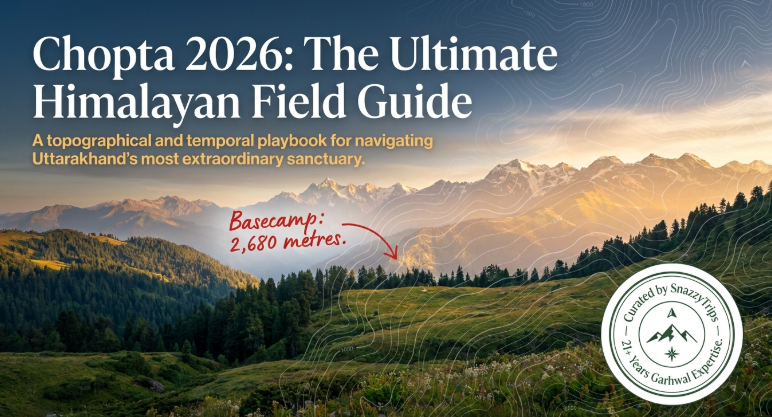
Things to Do in Chopta 2026 — Treks, Temples & Snow Views
What are the best things to do in Chopta in 2026?
The best things to do in Chopta include the Tungnath temple trek — the world's highest Shiva temple at 3,680 metres — the Chandrashila summit climb at 4,000 metres for a 360-degree Himalayan panorama, wildlife walks through the Kedarnath Wildlife Sanctuary, the Deoria Tal lake trek, and snow viewing in winter when the meadows around Chopta are blanketed in white. Chopta sits at 2,680 metres in Rudraprayag district of Uttarakhand — a high-altitude meadow destination that combines pilgrimage, trekking, and Himalayan scenery in a single compact location with almost none of the commercial infrastructure that has diluted similar destinations.
Quick Summary
| Parameter | Details |
|---|---|
| Location | Rudraprayag District |
| Altitude | 2,680 metres |
| Best Time to Visit | March–June & September–November (winter for snow) |
| Known For | Tungnath Temple, Chandrashila Trek, alpine meadows |
| Nearest Town | Ukhimath (13 km) / Gopeshwar (35 km) |
| Ideal Duration | 3–5 days |
| Type of Destination | Trekking, pilgrimage, nature, winter snow |
Why Chopta Is Called India's Mini Switzerland — And Why That Undersells It
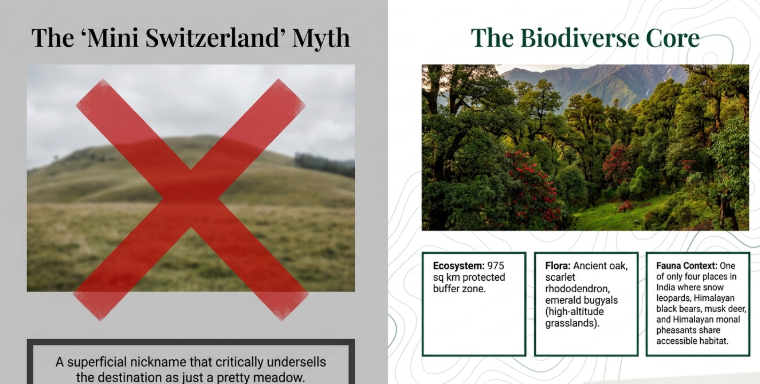
The nickname India's Mini Switzerland has stuck to Chopta for decades. And while the comparison captures something real — the vast green meadows, the flower-covered slopes, the Alpine quality of the light at this altitude — it also undersells what makes Chopta genuinely extraordinary.
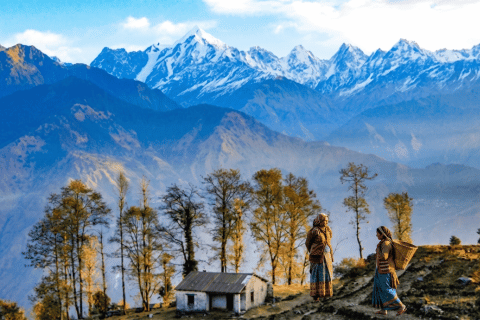
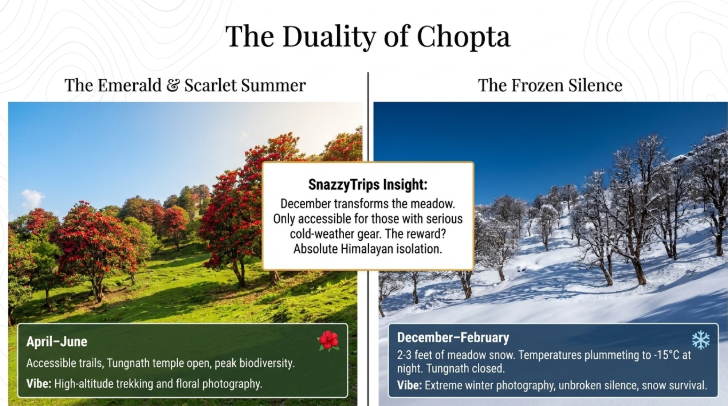
Chopta is not just a pretty meadow. It sits at the edge of the Kedarnath Wildlife Sanctuary — one of the most biodiverse protected areas in the Garhwal Himalayas, home to musk deer, Himalayan black bear, snow leopard, and hundreds of Himalayan bird species. The meadow itself sits above the treeline in a natural clearing ringed by oak, rhododendron, and bugyals — high-altitude grasslands — that turn different colours across every season. In March the rhododendrons bloom red. In May the bugyals are emerald green. In October they turn gold and amber. In January they are buried under two to three feet of snow.
Above the meadow, the trail to Tungnath and Chandrashila climbs through one of the finest short trekking routes in Uttarakhand — a 3.5 km ascent through the sacred forest to the world's highest Shiva temple, and then a further 1.5 km to a summit that delivers one of the most complete Himalayan panoramas accessible to any non-technical trekker in India.
Chopta has almost no tourist infrastructure by Uttarakhand standards. No ropeway. No hotel chains. No organised sightseeing circuit. What it has instead is the kind of Himalayan experience that most popular hill stations have permanently lost to their own popularity.
As the best DMC in Uttarakhand with 21+ years of on-ground Garhwal expertise, SnazzyTrips has been taking travellers to Chopta since long before it appeared on any travel list — and this guide reflects every lesson learned from those years on this specific ground.
1. Tungnath Temple Trek — The World's Highest Shiva Temple
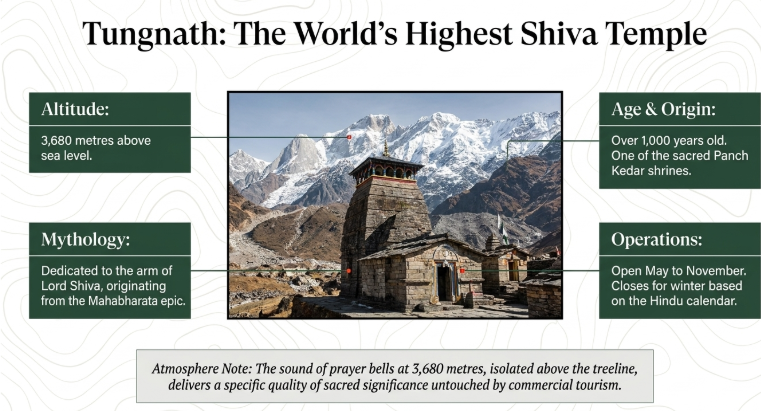
Distance: 3.5 km from Chopta base Altitude: 3,680 metres Difficulty: Easy to Moderate Time required: 3–4 hours round trip Temple open: May to November (closes for winter)
The Tungnath temple trek is the defining Chopta experience — and one of the finest short treks in all of Uttarakhand. The 3.5 km trail from the Chopta base climbs steadily through a sacred forest of oak and rhododendron before emerging onto open bugyal meadows with expanding views of the Garhwal Himalayan range.
The temple itself is ancient — believed to be over 1,000 years old, one of the Panch Kedar shrines of the Garhwal Himalayas, and dedicated to the arm of Lord Shiva according to the Mahabharata mythology. At 3,680 metres it holds the distinction of being the world's highest Shiva temple — a fact that adds a specific quality of sacred significance to an already beautiful setting.
What makes this trek special:
The approach trail in May is lined with rhododendron trees in full scarlet bloom — one of the finest displays of Himalayan flowering anywhere in Uttarakhand. In October the same trail turns gold with autumn colour. In winter the path is snow-covered and the temple closed — but the landscape is extraordinary for those willing to manage the conditions.
The temple complex at the top includes several smaller shrines in addition to the main Tungnath mandir. Local priests perform regular pujas during the open season. The sound of prayer bells at 3,680 metres, with the Garhwal peaks visible above and the Chopta valley below, is one of the most atmospherically powerful experiences in the region.
Practical notes:
- The trail starts from the main Chopta parking area — clearly marked
- Pony rides available for those unable to trek the full distance
- Temple is open approximately May to November — exact dates follow the Hindu calendar
- The path can be slippery after rain — wear proper trekking shoes
2. Chandrashila Summit — The 360-Degree Himalayan Panorama
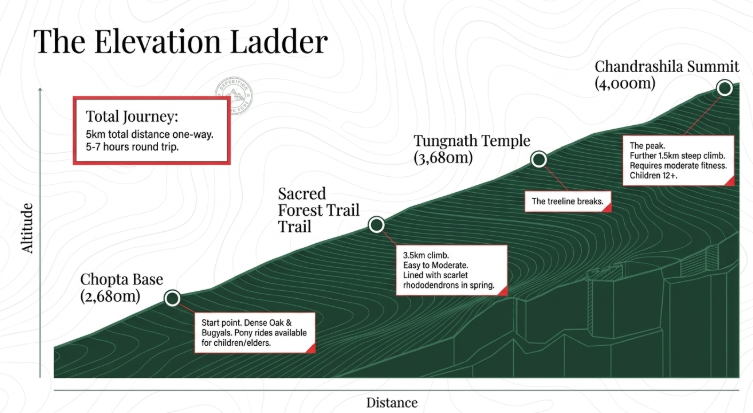
Distance: 5 km from Chopta base (via Tungnath) Altitude: 4,000 metres Difficulty: Moderate Time required: 5–7 hours round trip Best time: April–June and September–October
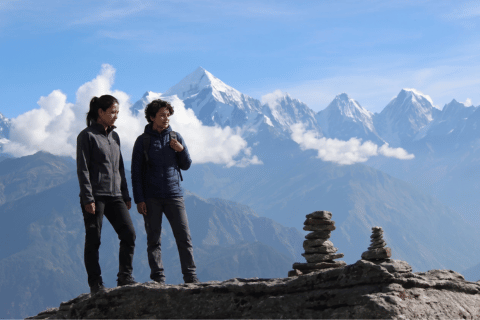
Chandrashila — literally "Moon Rock" — is the rocky summit at 4,000 metres above the Tungnath temple. The additional 1.5 km climb from the temple to the summit is steep in places but delivers what is widely considered the finest accessible panoramic Himalayan view in the Garhwal region.
From Chandrashila on a clear morning you can see simultaneously:
- Kedarnath peak and the Kedarnath sanctuary
- Trishul (7,120 metres) — the trident-shaped triple peak
- Nanda Devi (7,816 metres) — India's second-highest mountain
- Bandarpunch and the Yamunotri range to the west
- Chaukhamba — the four-headed massif above Badrinath
- The entire sweep of the Garhwal Himalayas from west to east
No other accessible summit in Uttarakhand below 4,500 metres offers a comparable panorama without technical mountaineering equipment.
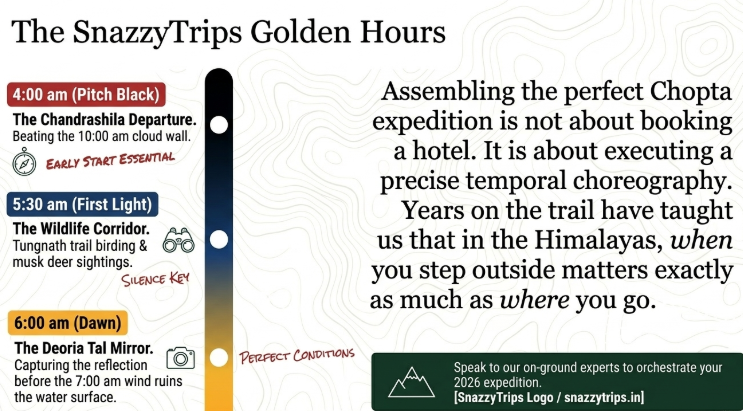
The Chandrashila sunrise: For the finest experience, leave Chopta at 4:00am with torches. Reach the summit by 6:00am for the sunrise over the Himalayan range. The east-facing aspect of Chandrashila means the peaks light up directly in front of you as the sun rises — a panoramic dawn that travellers consistently describe as the finest single moment of any Uttarakhand trip.
Our Chopta Tungnath Chandrashila trek package includes the summit climb with an experienced guide, pre-dawn departure timing, and all logistics handled end to end.
3. Deoria Tal — The Mirror Lake With a Himalayan Reflection
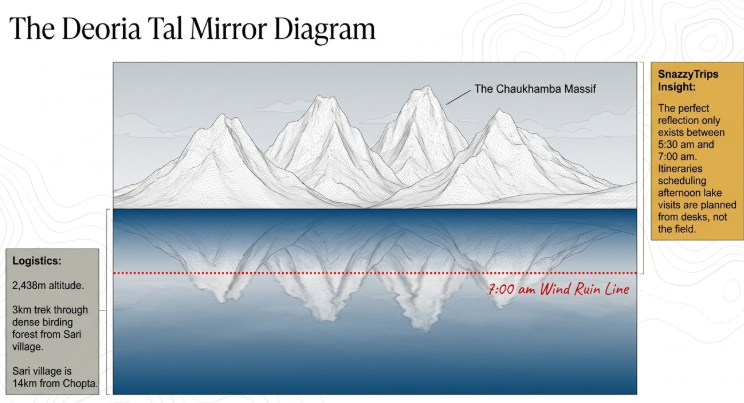
Distance: 3 km trek from Sari village (14 km from Chopta) Altitude: 2,438 metres Difficulty: Easy Time required: 3–4 hours round trip Best time: April–June and September–October
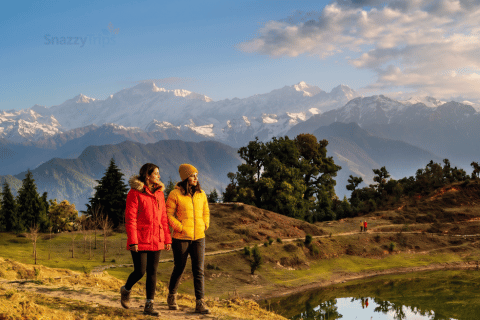
Deoria Tal is a high-altitude lake nestled in dense oak and rhododendron forest — famous for its mirror-still morning surface that reflects the Chaukhamba massif above Badrinath in near-perfect detail. This reflection — the four white peaks of Chaukhamba inverted in the lake surface at dawn — is one of the most photographed Himalayan scenes in Uttarakhand and one of the few that genuinely lives up to the photographs.
The 3 km trek from Sari village to the lake passes through dense forest with excellent birdwatching — the surrounding woodland is one of the best locations in the Garhwal region for Himalayan monal pheasant, koklass pheasant, and various Himalayan woodpecker species.
Practical notes:
- Sari village is 14 km from Chopta — easy half-day excursion
- The lake is best at dawn before any wind disturbs the mirror surface
- Camping is permitted at designated spots near the lake — magical experience
- Entry fee applies — nominal amount
4. Kedarnath Wildlife Sanctuary — Himalayan Wildlife at Chopta
Location: Chopta sits inside the buffer zone Best time: April–June (before monsoon) and September–October What to look for: Musk deer, Himalayan black bear, snow leopard, monal pheasant
Chopta is positioned at the edge of the Kedarnath Wildlife Sanctuary — a 975 sq km protected area that is one of the most biodiverse Himalayan ecosystems in India. The meadows around Chopta and the forest on the Tungnath trail are active wildlife corridors — particularly in the early morning before human activity increases.
What you can reasonably expect to see:
- Himalayan monal pheasant — the state bird of Uttarakhand — regularly seen on the Tungnath trail in early morning
- Musk deer — frequently spotted in the forest edge at dawn and dusk
- Himalayan black bear — present in the sanctuary, less commonly seen
- Snow leopard — extremely rare sighting but present in the higher sanctuary zones
- Bird species — over 150 species recorded in the sanctuary area
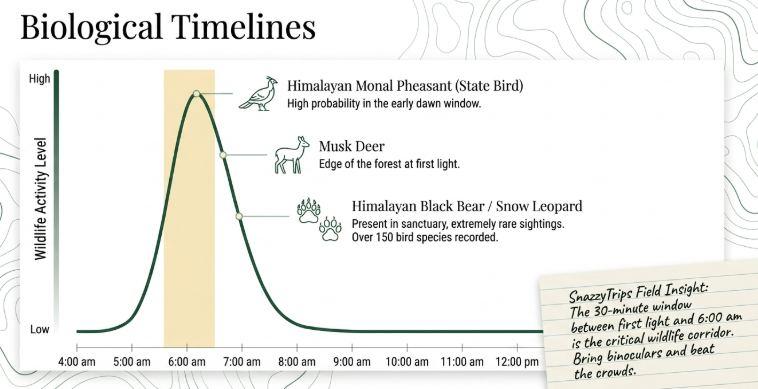
Practical tip: For wildlife observation, begin the Tungnath trail at 5:30am before other trekkers arrive. The 30-minute window between first light and 6:00am produces the highest wildlife activity on the trail. A pair of binoculars transforms this experience.
5. Chopta Valley in Winter — Snow Views and Silence
Best time: December–February What to expect: 2–3 feet of snow on the meadow, frozen trail to Tungnath, extreme cold Difficulty: Moderate to Challenging in heavy snow
Chopta in winter is a completely different destination from Chopta in summer. The meadow fills with snow from December onward. The Tungnath trail is snow-covered and the temple is closed — but the landscape is extraordinary. Unbroken white meadow stretching to the treeline. Silence so complete you can hear the snow settle. The Himalayan peaks sharp and clear in the cold dry air above.
Winter Chopta attracts photographers specifically — the combination of snow-covered meadows, rhododendron trees laden with frost, and the clarity of the Himalayan view in cold dry air produces images that the green summer season cannot match.
What to do in Chopta in winter:
- Snow walks on the Tungnath trail — up to the snowline even if the temple is closed
- Photography — dawn light on snow-covered meadows is extraordinary
- Birdwatching — winter birds including various thrush and finch species not present in summer
- Simply sitting at the meadow edge in the silence — an experience increasingly rare in accessible Uttarakhand
Practical warning: Winter temperatures at Chopta drop to -10°C to -15°C at night. Proper cold-weather gear is non-negotiable. Accommodation is limited in winter — many guesthouses close. Book in advance.
📍 Quick Fact: Chopta sits at 2,680 metres in the Kedarnath Wildlife Sanctuary buffer zone — one of only four places in India where the snow leopard, Himalayan black bear, musk deer, and Himalayan monal pheasant share the same habitat within a single accessible area.
6. Ukhimath — The Winter Home of Kedarnath
Distance from Chopta: 13 km Best time: November–April (when Kedarnath is closed) Time required: Half day
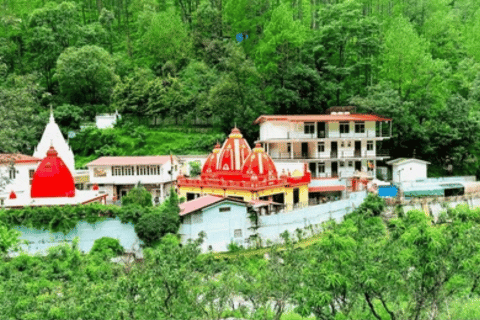
Ukhimath is a small temple town 13 km from Chopta that serves as the winter residence of the Kedarnath deity — brought here each November when the high-altitude shrine closes for winter and returned to Kedarnath each May. During the winter months, the full Kedarnath puja and ceremony is performed at Ukhimath — making it a significant pilgrimage destination for those who cannot visit Kedarnath during the open season.
The main Ukhimath temple complex also houses images associated with Usha (granddaughter of Banasura) and Aniruddha (grandson of Lord Krishna) — giving it a mythological significance beyond the Kedarnath connection.
For Chopta visitors in winter, a morning visit to Ukhimath for the Kedarnath puja followed by an afternoon on the Chopta snowfield is one of the finest single-day experiences in the Garhwal Himalayas outside the main tourist season.
7. Hill Stations Near Chopta — Extending Your Garhwal Trip
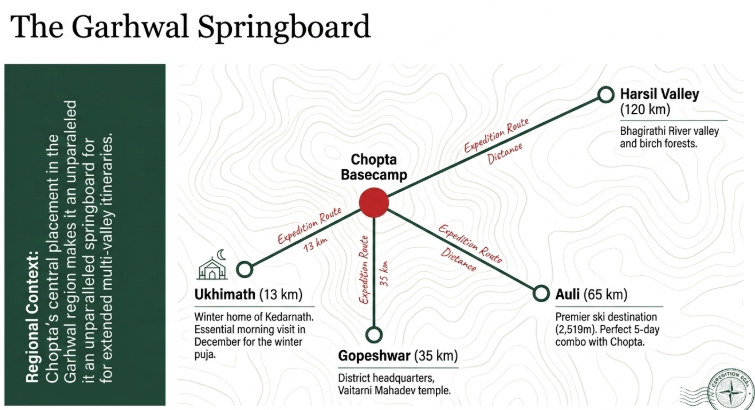
Chopta's location in central Garhwal makes it an excellent base for exploring the wider region. Within 2–3 hours you can reach:
Gopeshwar (35 km) — The district headquarters of Chamoli with a significant Shiva temple (Vaitarni Mahadev) and access to the Auli road.
Auli (65 km) — Uttarakhand's premier ski destination at 2,519 metres. Chopta and Auli in a combined 5-day itinerary is one of the most rewarding Garhwal mountain combinations — pilgrimage and trekking at Chopta, skiing or Himalayan views at Auli.
Harsil Valley (120 km) — One of Uttarakhand's most beautiful and least visited valleys on the Gangotri road. Our Chopta Harsil Valley tour package from Delhi combines both destinations in a single itinerary — Chopta for the Tungnath trek and Chandrashila panorama, Harsil for the Bhagirathi River valley and birch forest scenery.
🧭 Traveller Tip: Do Chandrashila on your first full day in Chopta — not your last. The most common Chopta planning mistake is saving the summit for the final day when weather or fatigue prevents it. Arrive at Chopta in the afternoon, rest overnight, and begin the Chandrashila climb at 4:00am the next morning. Everything else — Deoria Tal, Ukhimath, wildlife walks — can flex around it.
🏔️ SnazzyTrips Insights — What Years on the Chopta Trail Has Taught Us
Our teams have operated Chopta packages for years — and the operational insight that changes every single Chopta trip is this: the quality of your Chandrashila experience is entirely determined by what time you leave Chopta base camp.
Travellers who leave at 6:00am for Chandrashila arrive at the summit at approximately 10:00am — by which time cloud has typically built around the Himalayan peaks. They see a partial panorama on a good day and a wall of cloud on an average one. They leave disappointed.
Travellers who leave at 4:00am with torches arrive at the Tungnath temple as the first light appears on the eastern peaks. They reach Chandrashila summit by 6:00am — 30 minutes before sunrise — and watch the Himalayan range ignite from dark silhouette to burning gold over the course of 45 minutes. This is not an incremental improvement. It is a transformative difference in the experience.
Every SnazzyTrips Chopta package includes a mandatory pre-dawn departure for Chandrashila — regardless of how much travellers resist the 3:45am alarm. Every single one thanks us afterward. Not some of them. Every one.
A second field insight: the Deoria Tal reflection is only perfect between 5:30am and 7:00am before any wind arrives from the valley. Any Chopta itinerary that schedules Deoria Tal as an afternoon excursion has been planned from a desk, not from the lake.
Explore our Chopta tour packages to plan a Chopta trip built around these exact timing insights
Best Time to Visit Chopta in 2026 — Month by Month
| Month | Weather | Suitability | Best For |
|---|---|---|---|
| Jan–Feb | Heavy snow, -10 to -15°C nights | ⭐⭐⭐ Good | Snow photography, winter silence |
| March | Snow melting, rhododendrons starting | ⭐⭐⭐⭐ Very Good | Early season, cold but beautiful |
| April | Rhododendrons peak, trail clear | ⭐⭐⭐⭐⭐ Excellent | Best colour on Tungnath trail |
| May | Clear skies, best Himalayan views | ⭐⭐⭐⭐⭐ Excellent | Chandrashila panorama at its finest |
| June | Pre-monsoon, green meadows | ⭐⭐⭐⭐ Very Good | Last clear month before rain |
| July–Aug | Monsoon — heavy rain, leech season | ⭐⭐ Moderate | Forest lush but trails slippery |
| September | Post-monsoon clarity | ⭐⭐⭐⭐⭐ Excellent | Clearest skies of the year |
| October | Golden meadows, peak photography | ⭐⭐⭐⭐⭐ Excellent | Best overall window |
| November | Cold, Tungnath closing | ⭐⭐⭐ Good | Last temple visits before winter |
| December | Snow arriving, very cold | ⭐⭐⭐ Good | Winter snow experience begins |
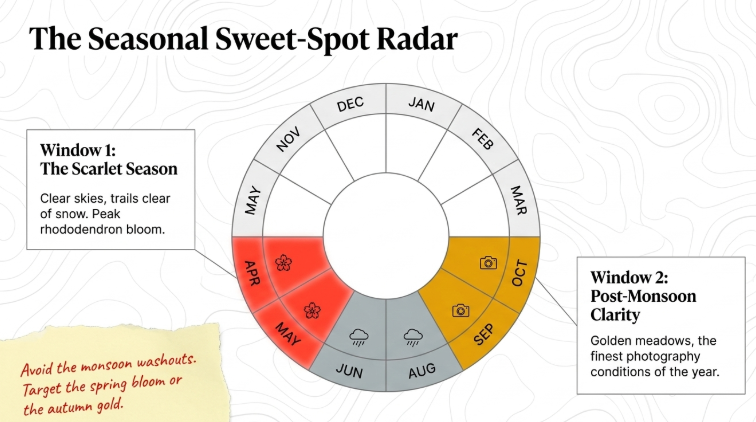
Two peak windows: April–May and September–October. April delivers rhododendron bloom on the Tungnath trail. October delivers the finest photography conditions and the clearest Himalayan views.
Things to Do in Chopta With Family
Chopta is excellent for families who enjoy nature and gentle trekking. The Tungnath temple trek at 3.5 km is manageable for children above 8 years with reasonable fitness. Deoria Tal is accessible for all ages. The wildlife walks on the meadow edge require no trekking at all. Chandrashila summit is suitable for children above 12 with good fitness.
Family planning notes:
- Stay in Chopta for at least 2 nights — altitude adjustment on Day 1, activities from Day 2
- Children under 8 can ride ponies on the Tungnath trail
- The Chopta meadow itself — flat, open, surrounded by forest — is excellent for young children who enjoy open space
- Winter visits with children require serious cold-weather gear — not recommended for very young children
Things to Do in Chopta in December
December is when Chopta transforms. The Tungnath temple closes for winter. The snow arrives on the meadow. The temperature drops below zero at night. And the destination becomes something entirely different — quieter, more dramatic, more atmospheric than any other month.
December-specific activities:
- Snow walks on the lower Tungnath trail — up to the snowline without attempting the closed temple
- Snowfall photography — the meadow and forest in fresh snow
- Ukhimath temple visit for the winter Kedarnath puja ceremony
- Birdwatching — winter species on the meadow edge at dawn
- Campfire evenings at the guesthouse — Chopta in December is one of the finest cold-weather camp experiences in Uttarakhand
For travellers planning a Delhi departure, our Chopta Tungnath tour package from Delhi covers full transfers, accommodation, and the Tungnath trek with guide — available for both summer and winter departures.
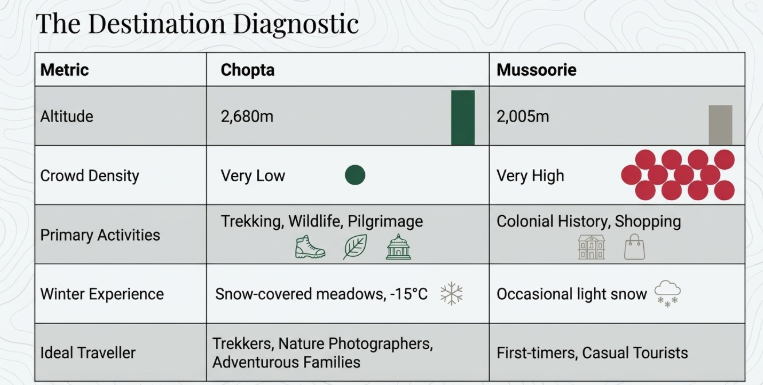
Chopta vs Mussoorie — Which to Choose?
A question our team gets frequently. The answer depends entirely on what you want from an Uttarakhand trip.
| Factor | Chopta | Mussoorie |
|---|---|---|
| Altitude | 2,680 m | 2,005 m |
| Crowds | Very low | Very high |
| Trekking | Excellent — Tungnath Temple + Chandrashila Trek | Limited |
| Cultural Heritage | Temple + wildlife | Colonial architecture |
| Family Accessibility | Moderate | Very easy |
| Winter Experience | Snow-covered meadow | Occasional light snow |
| Best For | Trekkers, pilgrims, nature lovers | Families, first-timers, history |
Chopta and Mussoorie serve completely different traveller profiles. For Mussoorie-specific planning, the best travel agency in Mussoorie guide covers what to look for before booking that destination.
How to Reach Chopta
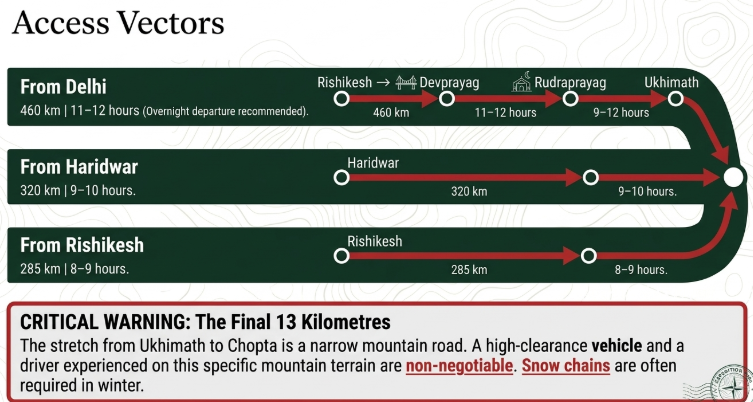
From Delhi: Delhi → Rishikesh → Devprayag → Rudraprayag → Ukhimath → Chopta Distance: 460 km — approximately 11–12 hours Best departure: Overnight or very early morning to reach Chopta by evening
From Haridwar: Haridwar → Devprayag → Rudraprayag → Ukhimath → Chopta Distance: 320 km — approximately 9–10 hours
From Rishikesh: Rishikesh → Devprayag → Srinagar → Rudraprayag → Ukhimath → Chopta Distance: 285 km — approximately 8–9 hours
Important: The final 13 km from Ukhimath to Chopta is a narrow mountain road requiring a high-clearance vehicle. In winter this road can be snow-covered and may require chains. A driver with experience on this specific road is essential.
Frequently Asked Questions
Q: What are the best things to do in Chopta in 2026?
A: The five best things to do in Chopta are the Chandrashila summit trek for the finest accessible Himalayan panorama in Garhwal, the Tungnath temple trek to the world's highest Shiva temple, the Deoria Tal lake for the Chaukhamba reflection at dawn, wildlife walks in the Kedarnath Wildlife Sanctuary buffer zone for monal pheasant and musk deer sightings, and winter snow walks on the meadow from December to February. SnazzyTrips plans all five as part of its Chopta tour packages with expert timing built into every activity.
Q: What are the best things to do in Chopta with family in 2026?
A: The best family activities at Chopta are the Tungnath temple trek — with pony rides available for younger children — the Deoria Tal lake walk from Sari village, wildlife spotting on the meadow edge at dawn, and the Chopta meadow itself which is an excellent open space for young children. Chandrashila summit is suitable for children above 12 with good fitness. A minimum 2-night stay is recommended to allow altitude adjustment before activities.
Q: What are the best things to do in Chopta in December?
A: December Chopta offers snow walks on the lower Tungnath trail, snowfall photography on the meadow, a visit to Ukhimath for the winter Kedarnath puja ceremony, birdwatching for winter species at dawn, and campfire evenings in the guesthouse. The Tungnath temple is closed in December but the snow-covered landscape is one of the finest cold-weather experiences in Uttarakhand. Carry proper winter gear — temperatures drop to -10°C to -15°C at night.
Q: What is the best time to visit Chopta in 2026?
A: April–May and September–October are the two peak windows. April delivers rhododendron bloom on the Tungnath trail — scarlet flowers against snow peaks. October delivers the clearest skies and finest photography conditions of the year. Both windows give excellent Chandrashila visibility. December to February is excellent for snow experiences but requires cold-weather preparation and has limited accommodation options.
Q: Is Chopta good for first-time trekkers?
A: Yes — the Tungnath trek at 3.5 km is one of the finest easy introductory treks in the Indian Himalayas. It is well-marked, not technically demanding, and delivers a genuine high-altitude temple experience at 3,680 metres. Chandrashila summit adds 1.5 km more and is rated moderate — suitable for reasonably fit first-timers. No prior trekking experience is required for either route.
Q: What are the places to visit in Chopta in January?
A: In January Chopta is snow-covered and Tungnath is closed for winter. The best experiences are snow walks on the lower trail toward Tungnath, the Ukhimath winter Kedarnath puja, wildlife birdwatching on the meadow at dawn, and the silence and dramatic winter photography that the snow-covered meadow provides. January is extremely cold — carry proper gear including thermal layers, waterproof boots, and a warm sleeping bag if camping.
Q: How long does the Tungnath Chandrashila trek take?
A: The full round trip from Chopta base to Chandrashila summit and back takes 5 to 7 hours depending on fitness and pace. The Tungnath section (3.5 km each way) takes approximately 2 hours up and 1.5 hours down. The additional Chandrashila section (1.5 km each way) takes approximately 1 hour up and 45 minutes down. Allow a full day — depart by 4:00am for the summit sunrise and return to Chopta by 12:00pm–1:00pm. For a planned pre-dawn departure with all logistics covered, check our Chopta Tungnath Chandrashila trek package.
Q: Can I find a good Uttarakhand travel agent for Chopta?
A: Yes — but look specifically for an agent with Chopta operational experience, not just a listing on their website. Ask whether they schedule the Chandrashila climb at pre-dawn and whether they include Deoria Tal as a morning excursion. These two timing questions immediately reveal whether the agent has been to Chopta or is simply assembling a package from a desk. For a complete framework on choosing any Uttarakhand travel agent, the best travel agent for Uttarakhand 2026 guide covers every checkpoint in detail.
Plan Your Chopta Trip With SnazzyTrips
Chopta at 4:00am — torch in hand, frost on the meadow, the Himalayan peaks dark silhouettes above — is one of those Uttarakhand moments that stays with you permanently. The pre-dawn silence. The trail through the sacred forest. The Chandrashila summit as the sun ignites the peaks. These are not incidental experiences. They are the entire point of Chopta — and they are entirely dependent on the planning that happens before you arrive.
SnazzyTrips has been operating Chopta packages for years. As the best DMC in Uttarakhand for Garhwal travel — serving both direct travellers and 150+ travel agent partners — we bring genuine field knowledge to every Chopta booking we take.
Travel Packages