Valley of Flowers Trek 2027: The Complete Guide from an Uttarakhand DMC
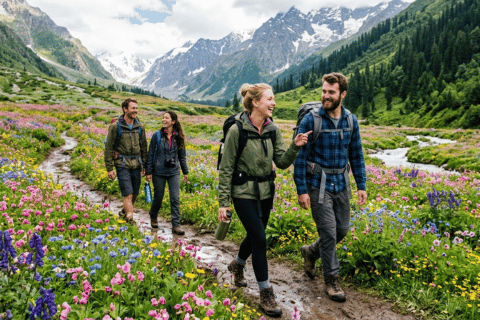
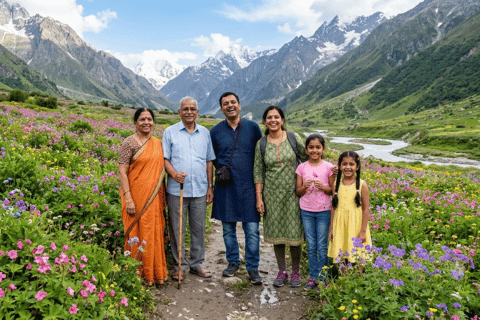
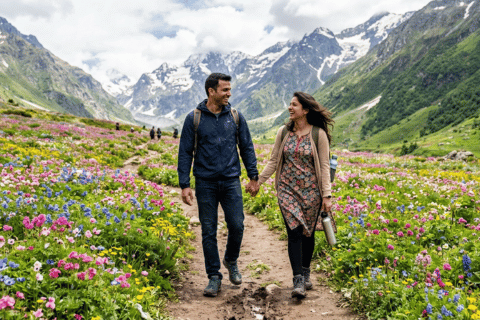
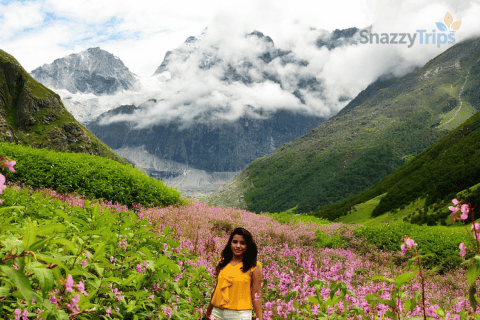
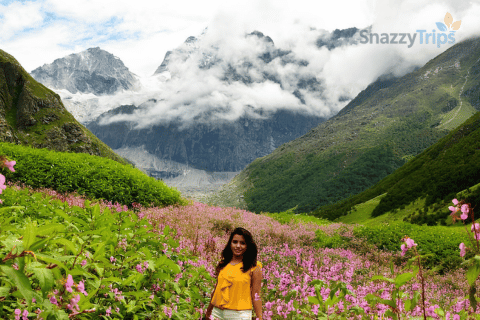
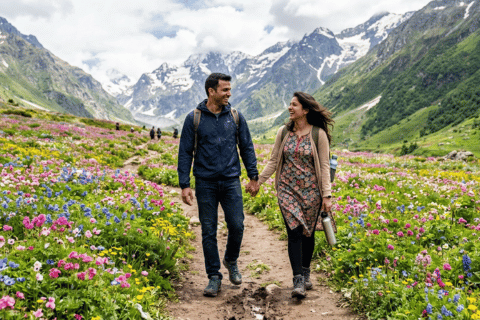
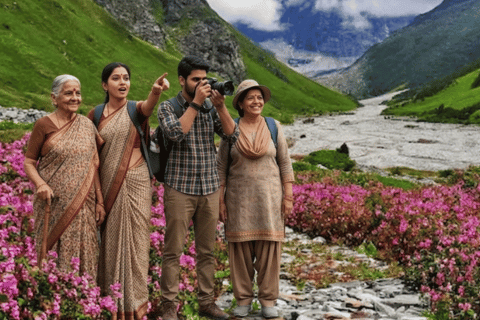
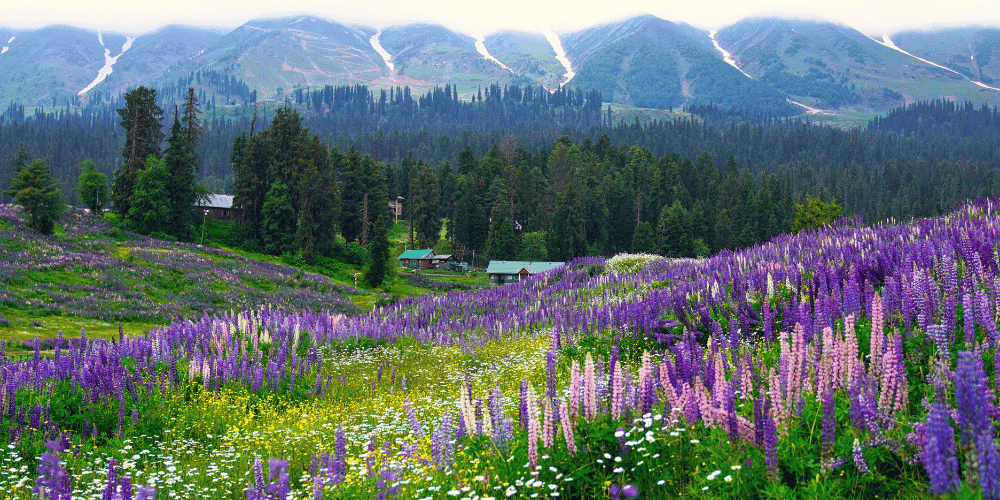
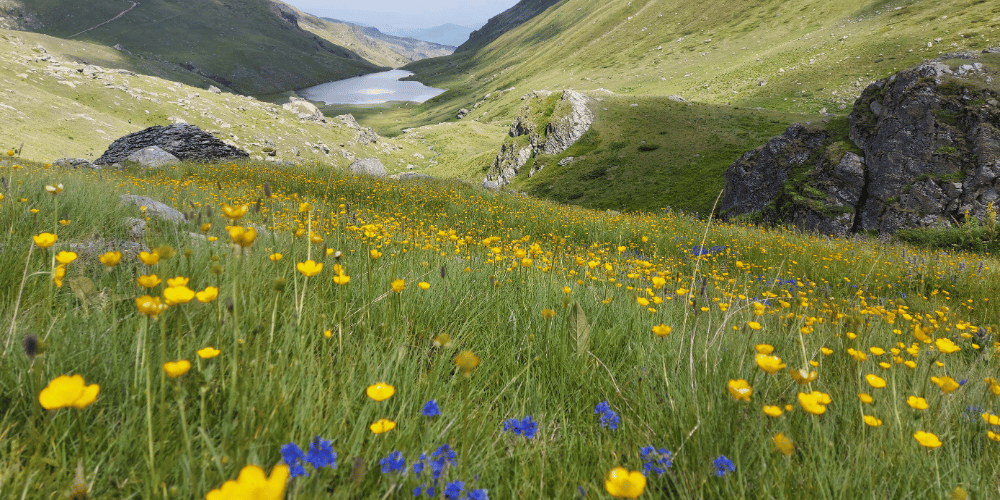
High in the Bhyundar valley of Chamoli, at about 3,300–3,650 metres, there's a meadow that sleeps under snow for most of the year. Then, for a few short weeks of the monsoon, it erupts into colour. Blue poppies, cobra lilies, primulas, geraniums, potentillas and hundreds of other alpine flowers cover the slopes. The Pushpawati river runs through the middle, and waterfalls drop from cliffs on every side. This is the Valley of Flowers, one of only a handful of UNESCO World Heritage Sites in the Indian Himalayas, and one of the most beautiful treks in the country.
A few kilometres away, at about 4,632 metres beside a glacial lake ringed by seven peaks, stands Hemkund Sahib, one of the highest gurudwaras in the world. Both are reached from the same mountain village, Ghangaria. That's why most pilgrims and trekkers do them together.
The Valley of Flowers is unlike most Himalayan treks. The destination itself is the highlight: you walk into the national park and back each day from Ghangaria, and overnight camping inside is not allowed. The flowers bloom on nature's schedule, not a fixed calendar, and the season falls right in the monsoon. Good planning means:
choosing the right weeks
booking Ghangaria early
keeping buffer days for rain
pacing the trek for altitude
SnazzyTrips is a Destination Management Company (DMC) based in Haldwani, and we've worked only in Uttarakhand since 2003. We run Valley of Flowers and Hemkund Sahib departures from Delhi, Haridwar, Rishikesh and Dehradun, and from more than 10 cities across India, including Mumbai, Ahmedabad, Kolkata, Bangalore and Pune.
This guide covers everything for 2027: the bloom calendar week by week, permits, the trek route and distances, Hemkund Sahib, packages and costs, fitness, monsoon safety, where you stay, what to pack, and the mistakes to avoid.
📋 How we keep this guide accurate: Our Garhwal team runs Valley of Flowers and Hemkund Sahib departures every monsoon season. We update this page when the forest department and the Hemkund Sahib Management Trust confirm dates, when permit rules change, and when trail, road or stay conditions change on the ground. Information we can't confirm ourselves, such as permit fees and pony rates, is marked as "set by the authorities" or "check locally".
Quick Answer
Packages: Valley of Flowers trek packages for 2027 start from about ₹18,999 per person for 6 days from Delhi, and ₹20,999–₹28,999 from cities like Ahmedabad, Mumbai, Kolkata, Pune and Bangalore.
Season: The national park is usually open from about 1 June to 31 October 2027, but the flowers are at their best from mid-July to mid-August.
Trek: Base yourself in Ghangaria, about 9–10 km above Pulna. The valley is a day trek of about 4–6 km each way, and Hemkund Sahib is about 6 km each way.
Valley of Flowers 2027 in 15 Key Facts
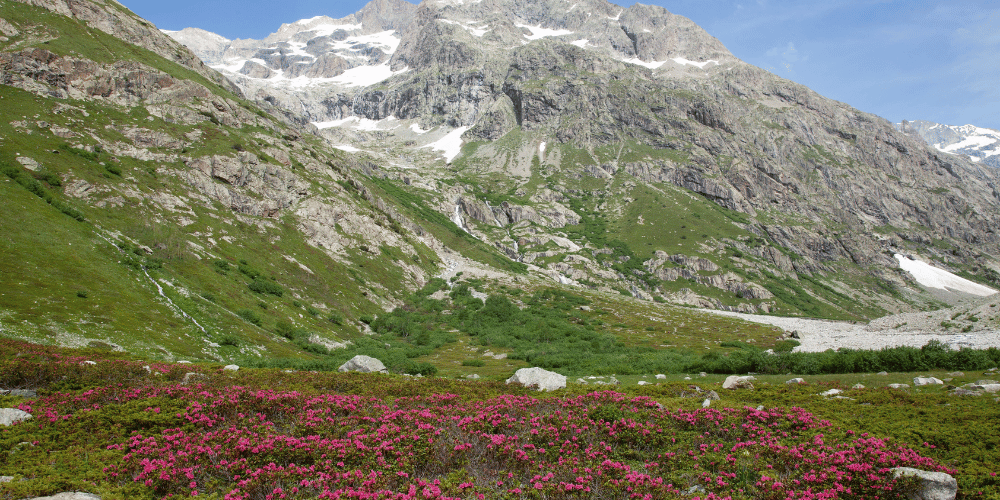
The Valley of Flowers is a national park in the Bhyundar valley of Chamoli district, Uttarakhand, at about 3,300–3,650 m.
It became a national park in 1982, and a UNESCO World Heritage Site in 2005, together with Nanda Devi National Park.
It covers about 87.5 sq km and is part of the Nanda Devi Biosphere Reserve.
Over 500 species of flowering plants have been recorded in the valley and its surroundings.
The park is usually open from about 1 June to 31 October.
Peak bloom is usually from the last week of July to the second week of August.
The base village is Ghangaria (about 3,050 m), reached by a 9–10 km trek from Pulna, near Govindghat.
The valley is a day trek of about 4–6 km each way from Ghangaria. Overnight stays inside the park aren't allowed.
Hemkund Sahib (about 4,632 m) is a separate day trek of about 6 km each way from Ghangaria.
Hemkund Sahib usually opens around late May and closes around early-to-mid October.
An entry permit from the forest department is required, issued near Ghangaria.
Ponies are available up to Ghangaria and on the Hemkund trail, but not inside the national park.
A weather-dependent helicopter shuttle runs between Govindghat and Ghangaria in season.
The valley was brought to the world's attention by mountaineer Frank Smythe in 1931.
SnazzyTrips packages start from about ₹18,999 per person (6 days from Delhi).
Valley of Flowers at a Glance
| Detail |
Information |
| Location |
Bhyundar valley, Chamoli District, Garhwal, Uttarakhand |
| Status |
National Park (since 1982); UNESCO World Heritage Site (with Nanda Devi National Park); part of the Nanda Devi Biosphere Reserve |
| Area |
About 87.5 sq km |
| Altitude |
About 3,300–3,650 m in the main valley |
| River |
Pushpawati |
| Flower Species |
Over 500 species of alpine flowering plants recorded |
| Base Village |
Ghangaria (about 3,050 m) |
| Road Head |
Govindghat, then a short drive to Pulna |
| Trek to Ghangaria |
About 9–10 km from Pulna |
| Trek into the Valley |
About 4–6 km each way from Ghangaria |
| Hemkund Sahib |
About 6 km each way from Ghangaria; about 4,632 m |
| Park Season |
Usually about 1 June to 31 October |
| Peak Bloom |
Mid-July to mid-August |
| Overnight Inside the Park |
Not permitted; return to Ghangaria every day |
| Permit |
Entry permit at the forest checkpost, Ghangaria |
| Difficulty |
Moderate; suitable for fit beginners |
| Ideal Duration |
6–8 days, depending on starting city |
| Starting Price |
From about ₹18,999 per person (6 days from Delhi) |
Valley of Flowers 2027: Dates and What's New
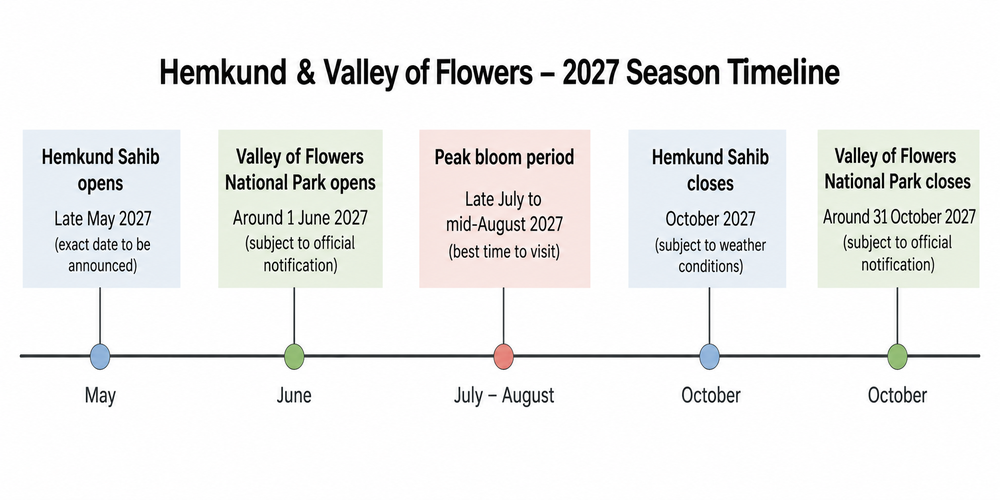
Expected 2027 Season
| Place |
Usual Opening |
Usual Closing |
| Valley of Flowers National Park |
Around 1 June 2027 |
Around 31 October 2027 |
| Hemkund Sahib |
Around late May 2027 |
Around early-to-mid October 2027 |
| Badrinath (nearby) |
May 2027 |
November 2027 |
The forest department confirms the national park's exact opening each year, and the Hemkund Sahib Management Trust announces the gurudwara's opening and closing dates. Opening can be delayed if snow remains on the trail. We'll update this page as soon as the 2027 dates are confirmed.
What Matters for 2027
Peak bloom falls in the busiest monsoon weeks (mid-July to mid-August). Ghangaria rooms sell out early, so book by April–May 2027 for these dates.
Faster access from Delhi. The Delhi–Dehradun Expressway, opened in April 2026, has cut the Delhi–Haridwar and Delhi–Rishikesh drive significantly, so you reach Joshimath sooner.
Ropeway plans. A ropeway from Govindghat towards Hemkund Sahib was approved in 2025. It's a multi-year project and won't be operating in 2027. For 2027, plan around trekking, ponies or the Govindghat–Ghangaria helicopter shuttle (weather-dependent).
Joshimath is also called Jyotirmath after its official renaming. Both names appear on signboards.
💡 SnazzyTrips Insight: The Booking Window Most People Miss
Every season, our team sees the same pattern. Families start searching for the Valley of Flowers in June, once they see monsoon photos online, but by then the best Ghangaria rooms for late July and early August are often already taken.
What our team recommends:
Peak bloom (late July to mid-August): confirm your dates and Ghangaria stay by April–May 2027.
First half of July or second half of August: book 6–8 weeks ahead.
June or September: 4–6 weeks ahead is usually enough.
What Is the Valley of Flowers?
A Valley Discovered by Accident
Local shepherds and villagers of the Bhyundar valley knew this meadow for generations, and believed it to be a land of fairies. The wider world learned of it in 1931, when the British mountaineer Frank Smythe was returning from the first successful ascent of Mount Kamet. Losing his way in bad weather, he walked into a valley so full of flowers that he returned years later to study it, and wrote the book The Valley of Flowers (1938).
Joan Margaret Legge
In 1939, the British botanist Joan Margaret Legge came to the valley to study its flowers. She slipped while collecting plants on a rocky slope and died. Her sister later built a small memorial in the valley, and today trekkers pause at Legge's memorial to pay their respects. It's one of the most touching stops on the trail.
A Protected Treasure
1982: The valley was declared a National Park.
2005: Together with the neighbouring Nanda Devi National Park, it was inscribed as a UNESCO World Heritage Site, recognised for its outstanding natural beauty and rare alpine flora.
Biosphere: It forms part of the Nanda Devi Biosphere Reserve, one of India's most important high-altitude ecosystems.
Why It's So Special
The valley sits in a transition zone between the Zanskar and Great Himalayan ranges, so plants from both the eastern and western Himalayas grow here. Combined with heavy monsoon moisture and a short summer, this creates a burst of flowering that few places in the world can match.
Valley of Flowers Bloom Calendar 2027 (Week by Week)
The most common question we get is: "When will the flowers be at their best?" The answer depends on snowmelt and the monsoon, which change every year. This is the typical pattern:
| Period |
What You'll See |
Crowds |
Our Rating |
| Early June |
Snow patches, fresh green shoots, the first primulas and anemones |
Low |
★★☆☆☆ |
| Mid–late June |
Snow melting, early blooms, waterfalls, green slopes |
Low |
★★★☆☆ |
| Early July |
Blooms building; monsoon arrives; valley turning colourful |
Moderate |
★★★★☆ |
| Mid-July to mid-August |
Peak bloom. The greatest variety and density of flowers, including blue poppy, cobra lily and geraniums. Brahma Kamal near Hemkund Sahib. |
High |
★★★★★ |
| Late August |
Still very colourful; some species fading, others at their best |
Moderate–High |
★★★★☆ |
| September |
Flowers fading; meadows turning golden; clearer mountain views as the monsoon retreats |
Low |
★★★☆☆ |
| October |
Mostly brown and golden meadows; cold; park closing |
Very low |
★★☆☆☆ |
Our 2027 recommendation:
For the best flowers: the last week of July to the second week of August.
For fewer crowds with good blooms: the first half of July or the second half of August.
For clear views and photography of the landscape: early-to-mid September (with fewer flowers).
📍 Honest advice: No one can guarantee a "perfect bloom" date. A late or weak monsoon, or a heavy snow year, can shift the peak by 1–2 weeks. Plan for the middle of the window, and keep a buffer day.
✅ SnazzyTrips Verdict: Which Week Should You Choose?
If You Are… Our Recommendation
Seeing the valley for the first time Last week of July to the first week of August
A photographer wanting maximum flower variety First two weeks of August, with an extra valley day
A Sikh pilgrim visiting Hemkund Sahib June or July (Hemkund is open; fewer peak-bloom crowds)
A family with children Early-to-mid July (good blooms, slightly drier trails than August)
Wanting to see Brahma Kamal Second and third week of August
Wanting fewer crowds First half of July, or the last 10 days of August
Interested in landscapes, not flowers Early-to-mid September
🗣️ From Our Ground Team: What Bloom Season Really Looks Like
In our experience leading groups through the season:
Flowers don't bloom all at once. Different species peak at different times, so every week looks a little different.
The deeper you walk, the better it gets. Many visitors turn back after 2–3 km, but the meadows beyond the first stretch are usually far more colourful.
Mornings after rain are often the most beautiful. Flowers are fresh and colours are vivid. Don't be discouraged by a wet night.
Clouds lift and fall quickly. A misty valley at 9 AM can be bright and clear by 11 AM, so patience pays off.
Flowers You Can See in the Valley of Flowers
Over 500 species of flowering plants have been recorded in the valley and its surroundings. These are some of the most famous ones to look out for:
| Flower |
What to Look For |
When |
| Himalayan Blue Poppy |
Delicate sky-blue petals; one of the valley's most famous flowers |
Late July–August |
| Brahma Kamal |
Uttarakhand's state flower; cream-white, cup-shaped; sacred in Hindu tradition |
August, especially near Hemkund Sahib |
| Cobra Lily |
Hooded shape resembling a cobra's head |
July–August |
| Himalayan Bellflower |
Bell-shaped blue and purple flowers |
July–August |
| Primulas |
Pink and purple flower clusters; among the first to bloom |
June–July |
| Geraniums |
Purple-pink carpets across the meadows |
July–August |
| Potentillas |
Yellow and red flowers |
July–August |
| Marsh Marigold |
Bright yellow, near streams |
June–July |
| Himalayan Balsam |
Pink and purple; often in large patches |
August |
| Anemones |
White and pink |
June–July |
| Asters |
Purple daisy-like flowers |
August–September |
| Rhododendron (dwarf) |
Small alpine rhododendrons on higher slopes |
June–July |
🧭 Photography tip: Mornings, before the clouds build, give the softest light and the most open flowers. Carry a rain cover for your camera. Use a phone or camera with a macro mode for close-ups of smaller flowers, and stay on the trail; don't step onto the flowerbeds.
Note: Picking flowers, uprooting plants or carrying plant material out of the national park is strictly prohibited.
📸 SnazzyTrips Photography Guide for the Valley
From years of guiding photographers and families, these are the tips that make the biggest difference:
Golden hours don't apply here. The valley often has soft, even light all morning because of the clouds. Shoot from as soon as you enter until clouds close in.
Get low, not close. Shoot flowers at their own level with the valley behind, rather than standing over them.
Protect your gear from rain. Use a waterproof cover, carry a dry cloth for the lens, and keep a spare battery warm in an inner pocket.
Phones work well. Modern phone cameras in portrait or macro mode capture flowers beautifully. You don't need heavy equipment.
Include people for scale. A friend standing on the trail with flowers and mountains around them makes the most memorable photos.
Respect the meadow. Never step off the trail for a better angle. One footstep can damage plants that took the whole short season to grow.
Wildlife and Birds of the Valley
The valley's flowers are its fame, but it's also home to rare Himalayan wildlife. Sightings are uncommon, since animals keep to higher slopes and forests, but they're part of what makes the park special:
Himalayan musk deer
Bharal (blue sheep)
Himalayan black bear
Snow leopard (very rarely seen)
Himalayan monal, Uttarakhand's colourful state bird
Butterflies, in large numbers during the bloom season
Stay quiet on the trail, never feed animals, and follow your guide's instructions.
Hemkund Sahib: The Complete Guide
What Is Hemkund Sahib?
Hemkund Sahib is a revered Sikh gurudwara at about 4,632 metres, beside the glacial Hemkund Lake and surrounded by seven snow peaks, the Sapt Shring. According to Sikh tradition, Guru Gobind Singh Ji meditated here in a previous life, as described in the Dasam Granth. Every summer, thousands of Sikh pilgrims and people of all faiths climb to the gurudwara. A Lokpal (Lakshman) temple stands beside the lake, linked with Hindu tradition.
The Hemkund Sahib Trek
| Detail |
Information |
| Start |
Ghangaria |
| Distance |
About 6 km one way |
| Altitude Gain |
About 1,500 m, from about 3,050 m to about 4,632 m |
| Time |
About 4–6 hours up and 3–4 hours down on foot |
| Difficulty |
Steep and demanding; much harder than the Valley of Flowers trail |
| Ponies and Dandi |
Available on the Hemkund trail, at fixed rates |
| Timings |
Pilgrims must return to Ghangaria the same day; overnight stays at Hemkund aren't allowed |
Tips for Hemkund Sahib
Start very early, at dawn. Weather usually turns cloudy and wet by the afternoon.
Walk slowly. The altitude gain is steep, and breathlessness is common.
The langar and hot tea served at the gurudwara are a blessing after the climb.
Look for Brahma Kamal near the lake in August.
Hemkund Lake is extremely cold. Pilgrims who take a holy dip should do so carefully.
If you feel unwell, turn back. Altitude sickness is a real risk on this trail.
🙏 SnazzyTrips Team Recommends: How to Plan Your Hemkund Sahib Day
From guiding pilgrims on this climb every season, this is the plan we follow:
Do the Valley of Flowers first, then Hemkund Sahib the next day. The valley day helps your body adjust to Ghangaria's altitude before the steeper climb.
Start at first light, with a light breakfast and warm layers on.
Use a pony for the climb if you're unsure of your fitness. Many pilgrims ride up and walk down.
Spend about an hour at the top for darshan, ardas and langar, and to see the lake. Don't linger too long at 4,632 m.
Begin the descent by early afternoon, before the weather usually turns.
Our honest view: Hemkund Sahib is harder than most first-time trekkers expect. It's absolutely achievable for most healthy adults at a steady pace, but it isn't a stroll.
Valley of Flowers Trek Route and Distances
How the Trek Works
Drive to Joshimath (Jyotirmath), then to Govindghat.
Short drive from Govindghat to Pulna (about 4 km) by local shared vehicle.
Trek from Pulna to Ghangaria (about 9–10 km). Ponies, porters and a helicopter shuttle from Govindghat are available.
Day trek into the Valley of Flowers and back to Ghangaria.
Day trek to Hemkund Sahib and back to Ghangaria.
Trek down to Pulna and drive back.
Distances and Altitudes
| Point |
Approx. Altitude |
Distance |
Mode |
| Joshimath |
About 1,890 m |
— |
Road |
| Govindghat |
About 1,830 m |
About 20 km from Joshimath |
Road |
| Pulna |
About 1,900 m |
About 4 km from Govindghat |
Local vehicle |
| Ghangaria |
About 3,050 m |
About 9–10 km from Pulna |
Trek, pony or helicopter (from Govindghat) |
| Valley of Flowers entry checkpost |
About 3,200 m |
About 1 km from Ghangaria |
Trek |
| Valley of Flowers main meadows |
About 3,350–3,650 m |
About 4–6 km from Ghangaria |
Trek |
| Hemkund Sahib |
About 4,632 m |
About 6 km from Ghangaria |
Trek or pony |
Get your trekking team to confirm these distances before publishing; trail changes can alter them slightly.
The Valley of Flowers Trail
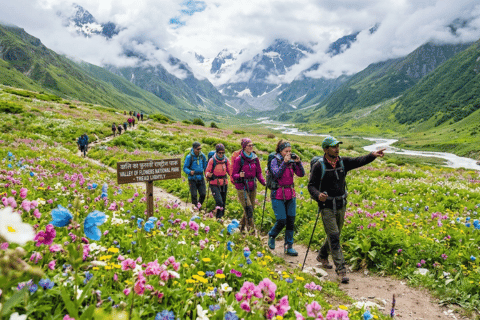
From Ghangaria, the trail crosses the Pushpawati and enters the national park at the forest checkpost, where permits are checked. It then climbs gently through forest and rocky sections, past waterfalls and glacier streams, before opening into wide flower meadows. The deeper you walk, the more varied the flowers. Most visitors walk 4–6 km in, spend a few hours in the meadows, and walk back to Ghangaria by late afternoon.
🗣️ From Our Ground Team: The Pulna–Ghangaria Climb
In our experience, the Pulna–Ghangaria trek is where most first-timers feel the effort, more than in the valley itself:
The path is stone-paved and well marked, with tea stalls and rest points along the way.
The climb is steady, with no flat stretch for long. Pace yourself from the start.
Ponies share the path. Always step to the mountain side when they pass, never the valley side.
Rain makes the stones slippery. Good shoes and a walking stick help a lot.
Send your main bag with a porter or pony if you can. Walking with only a daypack makes the climb far easier.
Park Entry Rules
Entry is allowed only during daytime hours set by the forest department, usually from early morning with a last entry around midday.
All visitors must exit the park by late afternoon.
No overnight stays, camping or cooking inside the park.
Ponies are not allowed inside the national park; you enter on foot.
Don't pick flowers or disturb plants and wildlife.
Carry your waste back out of the park.
Valley of Flowers Permit 2027
| Detail |
Information |
| Where to get it |
Forest department checkpost at the entry to the national park, near Ghangaria |
| Validity |
Usually valid for multiple days (commonly 3 days) |
| Fee |
A lower fee for Indian visitors and a higher fee for foreign visitors; fees are set by the forest department |
| Document |
Valid government photo ID (Aadhaar or Voter ID for Indians; passport for foreigners) |
| Online |
Check the forest department's official channels for any online option in 2027 |
Our team helps with permit formalities as part of every package. Confirm the current permit fees and validity with the forest department before publishing.
🧭 Travel tip: Keep your permit with you inside the park, and keep it safe. If it's valid for multiple days, you can use it for a second valley visit, so don't throw it away after the first day.
Valley of Flowers Tour Packages 2027
We offer more than 40 Valley of Flowers packages from cities across India. These are the most popular:
| Package |
Duration |
Starting Price (per person) |
Best For |
| Valley of Flowers Package from Delhi |
6 Days / 5 Nights |
₹18,999 |
Delhi-NCR trekkers |
| Valley of Flowers Package from Ahmedabad |
7 Days / 6 Nights |
₹20,999 |
Gujarat travellers |
| Valley of Flowers Couple Package from Mumbai |
7 Days / 6 Nights |
₹22,999 |
Couples |
| Valley of Flowers Trek Package from Ahmedabad |
6 Days / 5 Nights |
₹24,999 |
Trek-focused Gujarat travellers |
| Valley of Flowers Package from Mumbai |
7 Days / 6 Nights |
₹24,999 |
Mumbai travellers |
| Valley of Flowers Package from Kolkata |
6 Days / 5 Nights |
₹24,999 |
East India travellers |
| Valley of Flowers Package from Pune |
6 Days / 5 Nights |
₹25,999 |
Pune trekkers |
| Valley of Flowers Hemkund Sahib Package from Mumbai |
8 Days / 7 Nights |
₹26,999 |
Pilgrims plus the trek |
| Valley of Flowers Package from Bangalore |
6 Days / 5 Nights |
₹26,999 |
South India travellers |
| Valley of Flowers Family Package from Mumbai |
8 Days / 7 Nights |
₹28,999 |
Families |
| Auli & Valley of Flowers Package |
8 Days / 7 Nights |
₹19,999 |
Meadows plus Auli |
| Char Dham with Hemkund Sahib & Valley of Flowers |
13 Days / 12 Nights |
₹38,900 |
The complete pilgrimage plus the flower valley |
Prices are per person on a sharing basis. Packages from other cities usually exclude flights or trains to Delhi, Dehradun or Haridwar. Peak bloom dates may carry higher hotel rates.
Which Package Is Right for You?
| Traveller Type |
Recommended |
Why |
| First-time trekkers |
6–7 day package with both treks |
Enough time to enjoy the valley and Hemkund without rushing |
| Sikh pilgrims |
Hemkund Sahib package (8 days) |
Extra time for Hemkund and acclimatisation |
| Families with children |
Family package (8 days) |
Slower pace and buffer days |
| Couples |
Couple package (7 days) |
Better stays and a relaxed itinerary |
| Photographers |
7–8 days in late July to mid-August |
Two days in the valley for different light and blooms |
| Senior citizens |
8 days with pony or helicopter support |
Reduces strain on the Ghangaria climb |
| Char Dham pilgrims |
Char Dham with Hemkund and Valley of Flowers (13 days) |
Everything in one journey |
💬 What Our Team Recommends Most Often
When trekkers ask us which package to choose, this is our usual advice:
Most first-timers: a 7-day package. It includes both treks plus one buffer day, which in the monsoon often turns out to be the most valuable day of the trip.
Families with children under 12: the 8-day family package, with the Valley of Flowers as the main goal and Hemkund Sahib optional.
Serious flower lovers and photographers: a package with two separate valley days.
What we don't recommend: a 5-day "rush" version that squeezes Ghangaria, the valley and Hemkund into back-to-back days with no buffer. In the monsoon, one wet day can then mean missing the valley completely.
Valley of Flowers Itineraries 2027
6-Day Valley of Flowers and Hemkund Sahib from Haridwar or Rishikesh
Day 1: Haridwar or Rishikesh → Joshimath (about 270 km, 9–10 hours)
Drive along the Ganga and Alaknanda via Devprayag, Rudraprayag, Karnaprayag and Chamoli. Overnight in Joshimath. This night helps you acclimatise before the trek.
Day 2: Joshimath → Govindghat → Pulna → trek to Ghangaria (9–10 km)
Drive to Govindghat (about 20 km), then by local vehicle to Pulna. Trek through forest along the Lakshman Ganga to Ghangaria (about 5–6 hours). A pony, porter or helicopter (from Govindghat) is available. Overnight in Ghangaria.
Day 3: Valley of Flowers day trek
Early start. Enter the national park after the permit check, and walk 4–6 km into the meadows. Visit the Legge memorial if time and weather allow. Return to Ghangaria by late afternoon. Overnight in Ghangaria.
Day 4: Hemkund Sahib day trek
Dawn start for the 6 km climb to Hemkund Sahib (about 4,632 m). Pay respects at the gurudwara, see Hemkund Lake, and enjoy langar. Return to Ghangaria. Overnight in Ghangaria.
Day 5: Ghangaria → Pulna → Govindghat → Joshimath or Badrinath
Trek down to Pulna and drive to Joshimath. Optionally, visit Badrinath (about 25 km from Govindghat) for darshan and Mana Village. Overnight in Joshimath or Badrinath.
Day 6: → Haridwar or Rishikesh
Drive back to Haridwar or Rishikesh.
💡 Why Our Team Plans the Itinerary This Way
A Joshimath night before the trek: sleeping at about 1,890 m first helps your body adjust before Ghangaria
Arriving in Ghangaria with no other trek that day: you rest after the climb and enter the valley fresh
The valley before Hemkund: the gentler trek first, then the steep one, once you've adjusted
Separate days for each trek: a wet morning on one day doesn't cancel both experiences
Badrinath on the way back: it's only about 25 km from Govindghat, so it's an easy add-on
7–8 Day Version (recommended for peak bloom and families)
Add one of these:
A second day in the Valley of Flowers, to explore deeper meadows or catch better weather.
A buffer day, for rain or slow trekkers.
Badrinath and Mana Village on the way back.
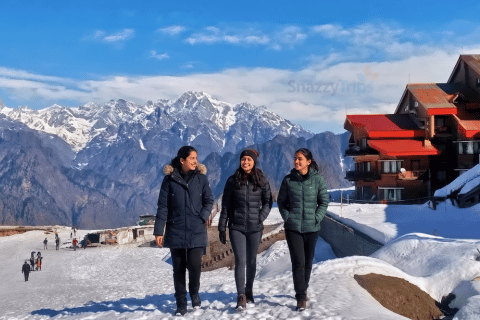
Auli, for a day of meadows and Himalayan views above Joshimath.
From Delhi
Add a Delhi → Rishikesh day at the start and a Rishikesh → Delhi day at the end. Since April 2026, the Delhi–Dehradun Expressway has made this much faster.
From Other Cities
Fly or take a train to Delhi or Dehradun, then follow the itinerary above. City packages are timed around common flight schedules.
⚠️ Keep at least one buffer day. Monsoon rain can slow the Rishikesh–Joshimath highway and the Govindghat area. A buffer day also gives you a second chance at the valley if your first day is very wet.
How to Reach the Valley of Flowers
By road: Delhi → Haridwar or Rishikesh → Devprayag → Rudraprayag → Karnaprayag → Chamoli → Joshimath → Govindghat → Pulna.
| Route |
Approx. Distance |
Approx. Time |
| Delhi → Rishikesh (via the expressway) |
240 km |
3.5–4.5 hours |
| Rishikesh → Joshimath |
250–260 km |
9–10 hours |
| Joshimath → Govindghat |
20 km |
45 minutes |
| Govindghat → Pulna |
About 4 km |
15–20 minutes |
| Pulna → Ghangaria (trek) |
About 9–10 km |
5–6 hours |
By air: The nearest airport is Jolly Grant, Dehradun, about 290 km from Govindghat.
By train: The nearest railheads are Haridwar and Yog Nagari Rishikesh.
Helicopter to Ghangaria: A helicopter shuttle between Govindghat and Ghangaria operates in season. It's weather-dependent, with limited seats, so ask us about current availability.
From your city:
Uttarakhand tour packages from Delhi
Uttarakhand tour packages from Mumbai
Uttarakhand tour packages from Ahmedabad
Uttarakhand tour packages from Kolkata
Uttarakhand tour packages from Bangalore
Uttarakhand tour packages from Pune
🧭 Travel tip: On the drive to Joshimath, plan for long hours on mountain roads. Carry motion-sickness medicine if you need it, eat light during the drive, and sit facing forward. Our drivers stop at regular intervals for tea and rest.
Valley of Flowers Trek Cost 2027
Short answer: Valley of Flowers packages start from about ₹18,999 per person for 6 days from Delhi. Packages from other cities cost about ₹20,999–₹28,999. Ponies, porters, the helicopter shuttle and personal expenses are usually extra.
Cost by Comfort Level (land package, per person)
Item Budget Standard ⭐ Premium
Typical price About ₹18,000–₹21,000 About ₹22,000–₹26,000 About ₹30,000+
Hotels en route Budget hotels 3-star hotels Best available hotels
Ghangaria stay Basic guesthouse Better guesthouse or hotel Best available room
Vehicle Shared or sedan Private SUV Premium vehicle
Extra Costs to Budget For
| Item |
Notes |
| National park permit |
Set by the forest department; lower for Indians, higher for foreigners |
| Pony (Pulna–Ghangaria and Hemkund trail) |
Rates fixed locally; vary by season |
| Porter (for your bag) |
Charged per bag or per day |
| Govindghat–Ghangaria helicopter |
Per person, per sector; weather-dependent |
| Meals not included |
About ₹500–₹1,000 per day |
| Rain gear and trekking shoes |
If you don't own them |
What's Usually Included
Hotel stays en route and in Ghangaria, on a sharing basis
Breakfast and dinner on most days
A vehicle for the road journey, with fuel, tolls, parking and driver allowance
Help with permit formalities
Trek guidance and coordination
Support on the ground throughout
What's Usually Not Included
Flights or trains to Delhi, Dehradun or Haridwar
Ponies, porters and the helicopter
Park permit fees (unless stated)
Lunch, snacks and personal expenses
Travel insurance and GST (unless stated)
💰 SnazzyTrips Insight: How to Save Without Spoiling the Trip
From planning this trek every season, these savings don't affect your safety or experience:
Travel in the first half of July or the second half of August instead of the peak weeks.
Travel as a group of 4–6 to share vehicle costs.
Hire one porter for two people's bags, instead of a pony each.
Take your own reusable bottle and snacks from Joshimath, where prices are lower than in Ghangaria.
Where we advise not to save: Don't skip the Joshimath night, and don't skip the buffer day. These two decisions matter more for a good trek than any hotel upgrade.
Fitness and Who Can Do the Trek
Is the Valley of Flowers Trek Difficult?
The Valley of Flowers is a moderate trek. It's suitable for active beginners, but it isn't a casual walk.
| Section |
Difficulty |
Why |
| Pulna → Ghangaria (9–10 km) |
Moderate |
A steady climb of about 1,150 m |
| Ghangaria → Valley of Flowers (4–6 km) |
Easy to moderate |
Gentle gradient with some rocky sections |
| Ghangaria → Hemkund Sahib (6 km) |
Hard |
A steep climb of about 1,500 m to about 4,632 m |
Who Should Book
Healthy adults who can walk 5–6 hours on mountain trails
Families with children aged about 8 and above, with a slower pace
Senior citizens with good health, using pony or helicopter support
Who Should Consult a Doctor First
Anyone with heart disease, uncontrolled blood pressure, asthma or other breathing conditions
Anyone with serious knee or back problems
Pregnant travellers
Preparing for the Trek (4–6 Weeks Before)
Walk briskly for 45–60 minutes daily
Climb stairs, or walk uphill, to build stamina
Practise breathing exercises (pranayama)
Break in your trekking shoes before the trip
✅ SnazzyTrips 4-Week Fitness Plan
| Week |
What to Do |
| Week 1 |
Brisk walk for 30–40 minutes, 5 days a week |
| Week 2 |
Brisk walk for 45 minutes, plus 10 minutes of stair climbing, 5 days a week |
| Week 3 |
Walk 60 minutes, including slopes or stairs, plus a 2–3 hour weekend walk |
| Week 4 |
Walk 60 minutes with a light daypack (3–4 kg), plus breathing exercises daily |
Tip: Do your weekend walk in the shoes you'll trek in. Blisters on the Pulna–Ghangaria climb are one of the most common problems we see.
Altitude Sickness
At Ghangaria (about 3,050 m) and Hemkund Sahib (about 4,632 m), some trekkers feel headache, nausea, dizziness or breathlessness.
To reduce the risk:
Spend a night at Joshimath before the trek
Drink 3–4 litres of water a day
Walk slowly
Avoid alcohol
Don't rush Hemkund Sahib on the day you arrive in Ghangaria
If symptoms get worse, descend and seek medical help.
✅ SnazzyTrips Senior Trekker Checklist
Medical check-up done, with a doctor's approval for high altitude
Pony or helicopter booked for the Pulna–Ghangaria stretch
Porter booked for the main bag
Hemkund Sahib treated as optional, decided on the day
Regular medicines plus a 2-week reserve in the daypack
Good rain gear and shoes with grip
Family phone numbers written on a card in a pocket
Monsoon Safety on the Valley of Flowers Trek
The Valley of Flowers blooms because of the monsoon, so rain is part of the experience.
Rain gear is essential. Carry a good poncho or rain jacket, a backpack cover and quick-dry clothes.
Trails can be slippery. Wear trekking shoes with good grip and use a walking stick.
Road delays are common. Landslides on the Rishikesh–Joshimath highway can hold traffic for hours. Keep a buffer day.
Follow official advisories. In very heavy rain, authorities may temporarily stop trekking or close the park for safety.
Start treks early. Mornings are usually clearer, and rain often increases in the afternoon.
Cross streams carefully. Use the bridges and follow your guide.
📍 Honest advice: Most July–August trips go smoothly, but you should expect rain on at least one day. Plan your trip so a wet day becomes an inconvenience, not a cancelled trek.
💡 SnazzyTrips Insight: How We Handle Monsoon Days
When the weather turns, our team:
checks road and trail updates every morning with local contacts in Joshimath, Govindghat and Ghangaria
follows official advisories and never pushes a group onto a closed trail
moves the valley day to the next morning if conditions are poor, using the buffer day
keeps families informed by phone and WhatsApp, even when the plan changes
Our approach is simple: no flower photo is worth an unsafe trail.
Where You Stay
| Place |
Type of Stay |
What to Expect |
| Joshimath |
Hotels |
Good choice; the acclimatisation night before the trek |
| Govindghat |
Basic hotels and gurudwara accommodation |
Convenient for early starts |
| Ghangaria |
Guesthouses, hotels, GMVN and gurudwara accommodation |
Simple rooms; limited electricity and hot water; book early for July–August |
| Badrinath (optional) |
Hotels |
If you add Badrinath on the way back |
📍 Ghangaria rooms: Ghangaria has limited rooms, and they sell out during peak bloom and the Hemkund Sahib pilgrimage season. We confirm your Ghangaria stay before departure.
Facilities in Ghangaria:
Basic restaurants and tea shops
Limited electricity
Patchy mobile network
No reliable ATMs, so carry cash from Joshimath
🏨 How SnazzyTrips Chooses Your Ghangaria Stay
Before confirming a Ghangaria room, we check:
availability of hot water (by bucket or geyser)
clean bedding and warm blankets
a dry room, which is important in the monsoon
the walking distance to the valley trail and the Hemkund trail
power backup for charging phones and cameras
What to Pack for the Valley of Flowers Trek
| Item |
Why |
| Trekking shoes with good grip (waterproof if possible) |
Wet, rocky and muddy trails |
| Rain poncho or jacket, and a backpack cover |
Monsoon rain is common |
| Quick-dry trekking clothes |
Cotton stays wet for hours |
| A warm fleece or light down jacket |
Ghangaria evenings and Hemkund are cold |
| Woollen cap and gloves |
For the Hemkund Sahib climb |
| Walking stick |
Helpful on the steep Hemkund trail and wet descents |
| A small daypack |
For the day treks |
| Water bottle and dry snacks |
Stay hydrated and energised |
| Sunscreen, sunglasses and a cap |
Strong high-altitude sun between showers |
| Personal medicines and a first-aid kit |
Medical facilities are limited |
| Photo ID (and copies) |
Needed for the park permit |
| Power bank |
Electricity is limited in Ghangaria |
| Cash in small notes |
No reliable ATMs beyond Joshimath |
| A head covering (for Hemkund Sahib) |
Required inside the gurudwara |
| Plastic bags for wet clothes and waste |
Keep dry items dry and bring your waste back |
🎒 SnazzyTrips Packing Tips (from our trekkers' experience)
Pack everything in plastic bags inside your bag. Even waterproof bags leak in heavy rain.
Keep one set of dry clothes only for Ghangaria evenings. Never wear it on the trail.
Two pairs of socks per day if you can. Wet feet cause blisters and cold.
Use a small daypack for the valley. Your main bag stays in Ghangaria.
Carry a lightweight umbrella as well as a poncho. It's useful in the meadows when you stop to look at flowers.
Valley of Flowers vs Other Beginner Himalayan Treks
| Factor |
Valley of Flowers |
Chopta–Tungnath |
Kedarnath |
| Best Season |
July–August (flowers) |
May–June, September–November, winter (snow) |
May–June, September–October |
| Highlight |
UNESCO alpine flower meadows |
Highest Shiva temple, Chandrashila views |
Jyotirlinga pilgrimage |
| Trek Distance |
9–10 km to the base, plus day treks |
3.5 km to Tungnath |
16–18 km one way |
| Difficulty |
Moderate |
Easy to moderate |
Moderate to hard |
| Weather |
Monsoon rain likely |
Clear in autumn; snow in winter |
Variable |
| Best For |
Nature lovers, photographers, pilgrims |
First Himalayan trek, sunrise views |
Pilgrims |
Chopta guide:
Kedarnath guide:
Our view: If you want flowers and the monsoon atmosphere, choose the Valley of Flowers. If you want clear Himalayan views and an easier trek, choose Chopta in autumn.
Combine the Valley of Flowers with Other Destinations
The Valley of Flowers lies on the Badrinath route, so it's easy to combine with other places:
Badrinath: About 25 km from Govindghat. Darshan of Lord Badri Narayan, plus Mana Village.
Auli: Green meadows and Nanda Devi views above Joshimath (reached by road; the ropeway is suspended).
Char Dham Yatra 2027: Our 13-day package adds Hemkund Sahib and the Valley of Flowers.
Kedarnath: Combine the flower valley with the Kedarnath Jyotirlinga.
Chopta and Tungnath: Another beginner-friendly Himalayan trek.
Rishikesh and Haridwar: Start or end with the Ganga Aarti.
Uttarakhand adventure tour packages, Uttarakhand trekking packages and Uttarakhand monsoon packages
Read our detailed Valley of Flowers attractions guide for more on what to see from Ghangaria to Hemkund Sahib.
Common Mistakes on the Valley of Flowers Trek
| Mistake |
Better Approach |
| Going in June or September expecting peak flowers |
For the best blooms, choose mid-July to mid-August |
| Going in October expecting flowers |
By October, the meadows are mostly brown and golden |
| Trekking to Ghangaria straight from the plains |
Spend a night at Joshimath first |
| Doing Hemkund Sahib on the day you reach Ghangaria |
Do the valley first, and Hemkund the next day |
| Booking Ghangaria late for peak dates |
Book July–August stays by April–May 2027 |
| Packing cotton clothes and no rain gear |
Pack quick-dry clothing and a good poncho |
| No buffer day in the monsoon |
Keep at least one extra day |
| Expecting to camp inside the park |
Overnight stays inside the park aren't allowed |
| Picking flowers as souvenirs |
It's prohibited; take photos instead |
| Turning back after the first 2 km of the valley |
The best meadows are usually deeper inside |
Responsible Trekking in a UNESCO World Heritage Site
The Valley of Flowers is a fragile ecosystem that only exists because it's protected. Please:
stay on the marked trail and never walk across the flowerbeds
don't pick, uproot or carry away any plant or flower
carry all your waste back to Ghangaria, including food wrappers and bottles
avoid single-use plastic and carry a refillable bottle
keep noise low so wildlife isn't disturbed
respect the religious sanctity of Hemkund Sahib and the Lokpal temple
support local businesses in Ghangaria, Govindghat and Pulna
Why Choose SnazzyTrips for the Valley of Flowers 2027
SnazzyTrips is a Haldwani-based Uttarakhand DMC since 2003, trusted by 20,000+ families, covering 50+ destinations with 150+ verified local partners and a 4.6/5 average rating across verified traveller reviews.
An Uttarakhand-only DMC: We plan and run Valley of Flowers departures ourselves with our own local network.
Confirmed Ghangaria stays: Booked before departure, even in peak bloom weeks.
Realistic pacing: A Joshimath acclimatisation night, separate days for the valley and Hemkund Sahib, and buffer days.
Permit help: We guide you through the national park permit process.
Packages from 10+ cities: Delhi, Mumbai, Ahmedabad, Kolkata, Bangalore, Pune and more.
Monsoon-ready planning: Daily road and weather checks, and itinerary adjustments when needed.
One coordinator: A single point of contact by phone and WhatsApp throughout the trip.
Read more about us on our About Us page and see traveller feedback on our Reviews page.
Valley of Flowers Glossary: Terms You'll Hear
| Term |
Meaning |
| Bhyundar Valley |
The local name for the valley area where the Valley of Flowers lies |
| Bugyal |
A high-altitude Himalayan meadow |
| Ghangaria |
The base village for the Valley of Flowers and Hemkund Sahib, at about 3,050 m |
| Govindghat |
The road head on the Badrinath highway, below Pulna |
| Pulna |
The village where the trek to Ghangaria begins |
| Pushpawati |
The river that flows through the Valley of Flowers |
| Hemkund Sahib |
The Sikh gurudwara at about 4,632 m beside Hemkund Lake |
| Sapt Shring |
The seven snow peaks surrounding Hemkund Lake |
| Brahma Kamal |
Uttarakhand's state flower, blooming at high altitude in August |
| Dandi |
A chair-like carrier used to carry pilgrims on the Hemkund trail |
| Langar |
The free community meal served at the gurudwara |
| Buffer day |
An extra day kept in the plan in case rain delays a trek |
Frequently Asked Questions: Valley of Flowers Trek 2027
1. When does the Valley of Flowers open in 2027?
The Valley of Flowers National Park usually opens around 1 June and closes around 31 October. The forest department confirms exact dates each year.
2. What is the best time to visit the Valley of Flowers in 2027?
The best time for flowers is mid-July to mid-August 2027. Early July and late August offer good blooms with fewer crowds.
3. When is the peak bloom in the Valley of Flowers?
Peak bloom usually falls between the last week of July and the second week of August. The exact peak varies by one to two weeks each year, depending on snowmelt and the monsoon.
4. What is the cost of a Valley of Flowers trek package in 2027?
Packages start from about ₹18,999 per person for 6 days from Delhi. Packages from Ahmedabad, Mumbai, Kolkata, Pune and Bangalore cost about ₹20,999–₹28,999.
5. How many days are needed for the Valley of Flowers and Hemkund Sahib?
Plan 6 days from Haridwar or Rishikesh, 7 days from Delhi, and 7–8 days from other cities or with a buffer day.
6. How long is the Valley of Flowers trek?
It's about 9–10 km from Pulna to Ghangaria, then 4–6 km each way from Ghangaria into the valley. Hemkund Sahib adds about 6 km each way.
7. Is the Valley of Flowers trek difficult?
It's a moderate trek, suitable for fit beginners. The Pulna–Ghangaria climb is steady, the valley trail is fairly gentle, and the Hemkund Sahib climb is steep and demanding.
8. Do I need a permit for the Valley of Flowers?
Yes. An entry permit from the forest department is required, with a valid photo ID. It's issued at the checkpost near Ghangaria.
9. Can I stay overnight inside the Valley of Flowers?
No. Overnight stays and camping inside the national park aren't allowed. All visitors stay in Ghangaria.
10. Are ponies allowed inside the Valley of Flowers?
No. Ponies are available from Pulna to Ghangaria and on the Hemkund Sahib trail, but not inside the national park.
11. Is there a helicopter to Ghangaria?
A helicopter shuttle between Govindghat and Ghangaria operates in season. It's weather-dependent with limited seats.
12. What is Hemkund Sahib?
Hemkund Sahib is a revered Sikh gurudwara at about 4,632 m, beside the glacial Hemkund Lake. According to Sikh tradition, Guru Gobind Singh Ji meditated here in a previous life.
13. When does Hemkund Sahib open in 2027?
Hemkund Sahib usually opens around late May and closes around early-to-mid October. The Hemkund Sahib Management Trust announces exact dates.
14. Can I do the Valley of Flowers and Hemkund Sahib on the same day?
It isn't recommended. Both are separate day treks from Ghangaria, and Hemkund is very steep. Do them on separate days.
15. Which flowers can I see in the Valley of Flowers?
You can see the Himalayan blue poppy, cobra lily, primulas, geraniums, potentillas, Himalayan bellflowers, marsh marigolds and many more, with Brahma Kamal near Hemkund Sahib in August.
16. Where can I see Brahma Kamal?
Brahma Kamal, Uttarakhand's state flower, usually blooms in August at higher altitudes, especially around Hemkund Sahib.
17. Who discovered the Valley of Flowers?
The British mountaineer Frank Smythe brought the valley to the world's attention in 1931, and later wrote The Valley of Flowers.
18. Who was Joan Margaret Legge?
Joan Margaret Legge was a British botanist who died in the valley in 1939 while collecting plants. Her memorial stands in the valley today.
19. Is the Valley of Flowers a UNESCO World Heritage Site?
Yes. It was inscribed with Nanda Devi National Park as a UNESCO World Heritage Site, and it's part of the Nanda Devi Biosphere Reserve.
20. Is the Valley of Flowers safe in the monsoon?
Yes, with sensible planning. Expect rain, carry proper gear, start treks early, keep a buffer day and follow official advisories.
21. Can children do the Valley of Flowers trek?
Yes. Children aged about 8 and above who are used to walking can usually manage at a slow pace. Hemkund Sahib may be too steep for young children.
22. Can senior citizens do the Valley of Flowers trek?
Healthy seniors can, using ponies or the helicopter for the Ghangaria climb. A medical check-up before travel is recommended.
23. Is mobile network available in Ghangaria?
Network in Ghangaria is limited and patchy. Inform your family before leaving Joshimath or Govindghat.
24. Is there an ATM in Ghangaria?
There's no reliable ATM in Ghangaria. Withdraw enough cash in Joshimath.
25. Can I combine the Valley of Flowers with Badrinath?
Yes. Badrinath is about 25 km from Govindghat, and many itineraries add Badrinath darshan and Mana Village on the way back.
26. How far in advance should I book for 2027?
For mid-July to mid-August 2027, book by April–May 2027. For June or September, book 4–6 weeks ahead.
27. Can I visit the Valley of Flowers in October?
The park may stay open until about 31 October, but the flowers are mostly gone by then. October suits landscape photography, not flowers.
28. How do I book a Valley of Flowers package with SnazzyTrips?
Call or WhatsApp +91 7983429120, email care@snazzytrips.in, or use the booking form. Share your dates, starting city, group size and fitness level, and we'll send a 2027 itinerary.
Sources and How We Verify This Guide
This guide combines our team's on-ground experience with information from official sources:
National park opening, closing, permits and park rules: Set each year by the Uttarakhand Forest Department, which manages the Valley of Flowers National Park.
Hemkund Sahib dates: Announced by the Hemkund Sahib Management Trust.
UNESCO status: The Nanda Devi and Valley of Flowers National Parks are listed together as a UNESCO World Heritage Site.
Road and weather conditions: Checked with district administration advisories and India Meteorological Department forecasts during the season, and confirmed by our drivers and local contacts.
Trek distances, timings and bloom patterns: Based on our own departures; they can vary with trail work and weather.
Our commitment: If anything on this page goes out of date, we update it as soon as we know. If you spot something that has changed, tell us at care@snazzytrips.in.
Plan Your Valley of Flowers Trek 2027
The Valley of Flowers blooms for only a few weeks each year, and the best of those weeks fill up fast. Plan early for 2027 with a team that knows the route, from the Joshimath acclimatisation night to confirmed Ghangaria rooms and the dawn climb to Hemkund Sahib.
📞 Call or WhatsApp: +91 7983429120 | ✉️ care@snazzytrips.in | 📍 Haldwani, Uttarakhand
Book a Free Consultation | Contact Us